DBT skills

DBT skills are parts of a specialized, evidence-based form of psychotherapy known as Dialectical Behavior Therapy that blends cognitive-behavioral techniques with acceptance and mindfulness strategies.
Summary
- DBT combines acceptance and change and balancing mindfulness and behavioral modification to help clients manage emotions, reduce harmful behaviors, and build healthier relationships.
- DBT has decades of evidence supporting its impact, particularly for borderline personality disorder and suicidal behavior.
- Mindfulness, Distress Tolerance, Emotion Regulation, and Interpersonal Effectiveness — empower clients to navigate emotional intensity and relational challenges. Download my free DBT worksheets.
- AI is transforming DBT practice and helping therapists automate notes, track progress, and offer digital skills coaching that reinforces therapy between sessions through EHRs like TheraPlatform.
Streamline your practice with One EHR
- Scheduling
- Flexible notes
- Template library
- Billing & payments
- Insurance claims
- Client portal
- Telehealth
- E-fax

Its aim is to help people manage intense emotions, reduce harmful behaviors, and build more effective relationships. While it’s perhaps best known for treating borderline personality disorder, DBT has been adapted across diagnoses and populations.
“DBT is among the most empirically supported psychotherapies for suicidal behavior and borderline personality disorder, with multiple randomized trials across independent research sites showing reductions in self-harm and hospitalizations,” said Dr. Marsha M. Linehan.
In her own clinical trials, Dr. Linehan demonstrated that Dialectical Behavior Therapy (DBT) could cut rates of self-harm and treatment dropout roughly in half relative to usual care. In one outpatient effectiveness study, about 77% of clients no longer met full BPD diagnostic criteria after a year of DBT.
The origins of Dialectical Behavior Therapy
DBT was developed in the late 1970s and early 1980s by Linehan, a psychologist at the University of Washington. Dr. Linehan’s inspiration came from her own early struggles with severe emotional pain and suicidal behaviors.
In her memoir, she recounts being hospitalized and undergoing intensive psychiatric treatment in her youth, experiences that shaped her deep empathy and drive to create a therapy that acknowledged both acceptance and change in healing.
Today, she describes DBT as an approach that teaches “a life worth living” – a phrase many clinicians adopt as the guiding goal of treatment.
Linehan recognized that standard cognitive-behavioral therapy (CBT) alone was insufficient for clients who were chronically suicidal or emotionally dysregulated. Those clients tended to drop out or remain stuck.
She wove in elements of validation, mindfulness, and behavioral change under a dialectical philosophy: the idea that two opposites can both be true (e.g., acceptance and change).
Over time, DBT became one of the first psychotherapies to show consistent effectiveness in reducing suicidal behavior.
In fact, Linehan’s landmark two-year randomized controlled trial found that DBT participants were about half as likely to make a suicide attempt compared with community treatment by experts.
Practice Management + EHR + Telehealth
Manage more in less time in your practice with TheraPlatform
What does “Dialectical” mean?
In DBT, “dialectical” refers to the balance or the synthesis between apparent opposites. Therapists aim to help clients accept themselves just as they are in the moment (validating their experience) while also helping them make needed changes toward healthier functioning.
In practice, the dialectic is woven throughout: validating the person in their emotional struggle while pushing for progress, gently nudging them toward behavioral choices that support their values.
DBT training often emphasizes that therapists themselves must hold this tension neither pushing exclusively for change nor settling for stagnation.
How DBT improves mental health
Benefits beyond Borderline Personality Disorder
Though initially developed for borderline personality disorder (BPD) and suicidal behaviors, DBT has been adapted for many conditions involving emotion dysregulation, such as depression, anxiety, substance use, eating disorders, and PTSD.
Meta-analyses and reviews indicate that DBT tends to outperform community-based or treatment-as-usual care in reducing self-harm, parasuicidal behavior, and psychiatric hospitalizations.
In routine outpatient settings, as many as 77% of clients no longer met full BPD diagnostic criteria after one year of DBT.
Moreover, DBT skills training (group-based instruction) is emerging as a potent component in itself, sometimes showing greater effect sizes than individual therapy alone.
DBT skills
DBT is built around four primary DBT skills modules, each addressing a key area of emotional and relational life. Below is a deeper look at each DBT skills set.
Mindfulness
Mindfulness in DBT teaches clients to observe their thoughts, emotions, and sensations with curiosity and nonjudgment. Clients learn to ground themselves in the present moment instead of being swept away by internal storms or future worries. This practice of wise mind – the balance between the emotional mind and rational mind – underlies all DBT skills.
Distress tolerance
There will be moments when emotions surge too fast to be regulated. Distress tolerance strategies help clients survive crisis moments without resorting to harmful coping behaviors.
Techniques include distraction (e.g., ACCEPTS: Activities, Contributing, Comparisons, Emotions, Pushing away, Thoughts, Sensations), self-soothing, and crisis survival tools. These skills are about getting through rather than immediately changing what’s happening.
Emotional regulation
Emotion regulation skills help clients understand and modulate strong emotions.
They learn to reduce vulnerability with the PLEASE acronym:
- PL corresponds to treat physical illness
- E is for balanced eating
- A corresponds to avoiding mood-altering substances
- S and E correspond to prioritizing sleep and exercise
The goal in teaching this DBT skills viewpoint is to help identify and label emotions accurately, increase positive emotional events, and apply opposite action (acting contrary to emotion-driven urges) when needed.
Interpersonal effectiveness
Much of human distress arises in relationships. Interpersonal effectiveness teaches assertive communication, boundary-setting, and strategies for maintaining relationships without sacrificing self-respect or values.
Skills include DEAR MAN (Describe, Express, Assert, Reinforce, stay Mindful, Appear confident, Negotiate), GIVE (for preserving relationships), and FAST (for self-respect).
DBT components
DBT is not just a therapy to attend; it’s a lived practice.
Clients are encouraged to use their DBT skills daily, labeling their emotions, applying distress tolerance during stressful moments, engaging in mindfulness exercises, and leveraging interpersonal tools in real-world interactions.
Homework, diary cards, and between-session coaching help embed these habits into everyday life. Over time, clients internalize those skills and become more capable of navigating emotional intensity and relational complexity on their own.
DBT is unique in combining multiple modalities or DBT components.
- Individual therapy: One-on-one sessions where therapists help clients apply DBT skills to their specific life problems, chain their behaviors, and manage obstacles.
- Skills training group: A class-like format where clients learn and practice the four core modules together, promoting normalization, peer learning, and accountability.
- Phone coaching / in-the-moment support: Clients can reach out between sessions to get guidance applying skills when crises emerge.
- Consultation team for therapists: DBT therapists receive supervision and peer support to maintain fidelity and avoid burnout. This multi-modal approach ensures continuity across settings and helps clients generalize DBT strategies in real life.
Integrating AI tools to support DBT practice
Artificial intelligence is rapidly becoming a valuable support for DBT clinicians and clients.
When used ethically and with client consent, AI can enhance, not replace, therapeutic processes by making DBT tools more accessible, interactive, and data-informed reinforcing Dialectical Behavior Therapy components and DBT skills.
- Session support: AI-integrated telehealth platforms can help track client goals, summarize progress notes, or flag themes emerging in diary card data.
- Skills reinforcement: Chat-based AI companions or digital DBT apps can offer clients 24/7 prompts to practice skills, reflect on emotions, or receive personalized reminders.
- Therapist efficiency: AI tools can streamline documentation, create session summaries, or generate psychoeducational handouts, freeing clinicians to focus on client engagement.
- Accessibility: For clients in remote or underserved areas, AI-based self-help modules can extend DBT-informed care between live sessions.
When thoughtfully applied, AI supports the DBT philosophy of balancing acceptance and change. It accepts the realities of modern digital life while creating innovative ways to facilitate learning and emotional growth.
Is DBT right for your clients?
DBT is particularly well-suited for clients who:
- Engage in self-harm, suicidal ideation, or parasuicidal behavior
- Struggle with extreme emotional reactivity or mood swings
- Experience relational instability or chronic invalidation
- Are willing to engage in structured therapy with commitment
That said, DBT is resource-intensive and requires therapist training, commitment, and client willingness. It may not be ideal for clients who cannot engage in homework, who have immediate safety concerns beyond outpatient scope, or who are unwilling to enter both individual and group components.
Effectiveness of DBT for other conditions
Beyond BPD, DBT has shown efficacy in treating a range of conditions:
- Adolescents at high suicidal risk: DBT reduced repeat suicide attempts in multiple clinical trials (Linehan et al., 2015).
- Eating disorders: DBT adaptations (e.g., DBT-ED) help reduce binge and purge episodes.
- Substance use disorders: DBT integrated with addiction protocols supports relapse prevention.
- Mood and anxiety disorders: Studies suggest DBT can help with emotion regulation and comorbid symptoms.
Still, the strongest evidence remains for self-harm, BPD, and emotion dysregulation.
Resources for therapists
Free DBT worksheets
TheraPlatform provides a range of downloadable DBT resources to support your clinical work.
These include:
- ACCEPTS DBT Worksheet (for distress tolerance)
- PLEASE: Mind-Body Connection worksheet
- Opposite Action to Emotion worksheet
- Mindfulness practice worksheets
You can use these in teletherapy to assign homework, review skills, or guide clients during sessions.
Free Resources for Therapists
Click below and help yourself to peer-created resources:

Documenting DBT
An essential component of DBT (and indeed nearly all therapeutic work) is accurate, timely documentation.
One common structure is the SOAP format:
- S (Subjective): What the clients report — emotional state, concerns, events since last session.
- O (Objective): What the therapist observes — interaction patterns, tone, nonverbal cues.
- A (Assessment): Therapist’s clinical interpretation — what the subjective and objective data suggest in terms of attachment needs, emotional blocks, and relational dynamics.
- P (Plan): What will be done going forward — interventions, new homework, focus for next session.
Sample DBT SOAP note
Client: Maria L.
Date: 10/13/2025
Session #: 7
Diagnosis: Borderline Personality Disorder (F60.3)
Therapist: [Name], LCSW, DBT-Certified
S – Subjective
Client reports feeling “emotionally flooded” following a conflict with her partner earlier in the week. She stated, “I knew I was overreacting, but I couldn’t stop.” She identifies guilt and shame after the argument. Client noted using the TIP (Temperature, Intense exercise, Paced breathing) distress tolerance skill to calm herself “a little,” but reports mixed success. Denies suicidal ideation or intent but admits to fleeting thoughts of self-harm without plan or means. Reports journaling helped her clarify triggers.
O – Objective
Client presented alert, oriented, and appropriately dressed. Affect was labile, alternating between tearful and calm. Speech coherent but occasionally pressured when discussing interpersonal stressors. Thought processes logical and goal-directed. Client demonstrated partial use of DBT skills (mindfulness and distress tolerance). No acute safety concerns noted. Diary card reviewed: 4/7 days used mindfulness skills; 2/7 used opposite action; 1/7 used DEAR MAN for communication.
A – Assessment
Client continues to meet criteria for Borderline Personality Disorder with emotional dysregulation and relational instability. Increasing insight into emotional triggers and partial skill generalization observed. Improvement in willingness to apply DBT techniques, though inconsistent. Client benefits from validation and structured coaching to reinforce skill use. Emotional reactivity remains moderate. Progress: steady.
P – Plan
- Continue DBT individual therapy focusing on emotion regulation and interpersonal effectiveness.
- Assign Opposite Action worksheet for review next session.
- Encourage continued diary card tracking of skills use (especially distress tolerance and mindfulness).
- Schedule DBT skills group for reinforcement of interpersonal effectiveness (DEAR MAN, GIVE, FAST).
- Safety plan reviewed and updated; client agrees to contact crisis resources or therapist if self-harm urges intensify.
- Next session: 10/20/2025.
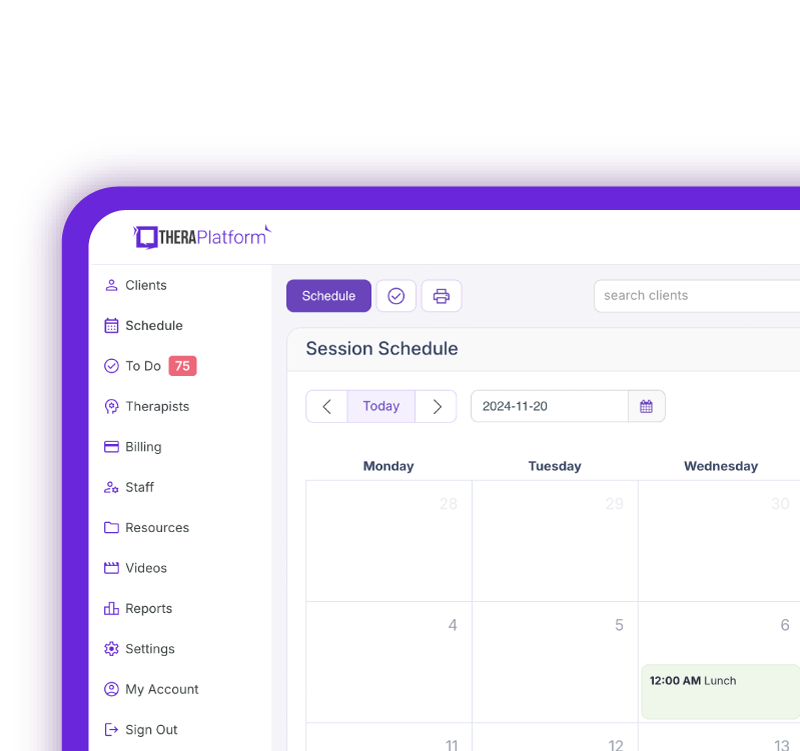
Modern EHR/practice management platforms (such as TheraPlatform) assist greatly with documentation by providing HIPAA‑compliant, integrated systems for note entry, storage, scheduling, and billing.
Watch this video to learn how to save time on therapy notes
They allow therapists to:
- Use templates (e.g. SOAP, DAP, others) to speed note writing and ensure completeness.
- Link notes to treatment plans, goals, and session history so that therapeutic progress is more easily tracked.
- Securely access and share documents (with clients or other providers, where appropriate) and maintain confidentiality.
Meanwhile, AI‑assisted note tools are emerging which can further help clinicians by:
- Automatically transcribing session audio (if permitted) and highlighting key moments (e.g. emotional shifts, major themes).
- Suggesting draft notes or filling in objective or assessment sections based on observed data, freeing up clinicians’ time.
- Supporting consistency and reducing missing components in notes, which helps from both clinical, legal, and insurance perspectives.
Together, structured SOAP ‑ type notes plus good EHR platforms and smart AI tools support better therapeutic outcomes, more efficient workflows, and stronger accountability.
Streamline your practice with One EHR
- Scheduling
- Flexible notes
- Template library
- Billing & payments
- Insurance claims
- Client portal
- Telehealth
- E-fax
Resources
TheraPlatform is an all-in-one EHR, practice management and teletherapy solution with AI-powered notes and Wiley Treatment Planners that allow you to focus more on patient care. With a 30-day free trial, you have the opportunity to experience TheraPlatform for yourself with no credit card required. Cancel anytime. They also support different industries including mental and behavioral health therapists in group practices and solo practices.
References
American Psychological Association. (n.d.). Dialectical Behavior Therapy (DBT). In ABCT Fact Sheets. Retrieved from https://www.abct.org/fact-sheets/dialectical-behavior-therapy
Centers for Cleveland Clinic. (n.d.). Dialectical Behavior Therapy: What It Is & Purpose. Retrieved from https://my.clevelandclinic.org/health/treatments/22838-dialectical-behavior-therapy-dbt
Linehan, M. M., Armstrong, H. E., Suarez, A., Allmon, D., & Heard, H. L. (1991). Cognitive-behavioral treatment of chronically suicidal borderline patients. Archives of General Psychiatry.
Stiglmayr, C., Stecher-Mohr, J., Wagner, T., et al. (2013). Effectiveness of dialectic behavioral therapy in routine outpatient care: A one-year follow-up. Borderline Personality Disorder and Emotion Dysregulation, 1, Article 20.
McLean Hospital. (n.d.). What Is DBT? A Guide to Dialectical Behavior Therapy. Retrieved from https://www.mcleanhospital.org/essential/dbt
Linehan, M. M. (2015). DBT® skills training manual (2nd ed.). Guilford Press.
National Institutes of Health / PubMed Central. (n.d.). Dialectical behavior therapy as treatment for borderline personality disorder: A review of the evidence. PMC.
DBT-UK. (n.d.). Stats Around DBT: Evidence, Success Rates, and Impact. Retrieved from https://dbt-uk.com/stats-around-dbt-evidence-success-rates-and-impact
Union Square Practice. (n.d.). Marsha Linehan and the Development of DBT. Retrieved from https://unionsquarepractice.com/marsha-linehan-and-the-development-of-dbt
Ritschel, L. A., Cheavens, J. S., & Nelson, J. (2022). Dialectical behavior therapy in a nutshell: An integrative review of theory, practice, and outcomes. American Journal of Psychotherapy, 76(1), 1–14. Retrieved from https://bpdfoundation.org.au/images/dbtinanutshell.pdf
TheraPlatform. (n.d.). DBT Worksheets. Retrieved from https://www.theraplatform.com/therapy-resources/category/66/dbt-worksheets
TheraPlatform. (n.d.). PLEASE: The Mind-Body Connection (DBT worksheet). Retrieved from https://www.theraplatform.com/therapy-resources/392/please-the-mind-body-connection
TheraPlatform. (n.d.). Opposite Action to Emotion Worksheet. Retrieved from https://www.theraplatform.com/therapy-resources/391/opposite-action-to-emotion-worksheet
PsychWire. (n.d.). Q&A with Marsha Linehan on DBT skills. Retrieved from https://psychwire.com/free-resources/q-and-a/uagy2j/helping-clients-develop-dbt-skills
FAQs about DBT skills
What are the main DBT skills?
The four primary DBT skills modules are Mindfulness, Distress Tolerance, Emotion Regulation, and Interpersonal Effectiveness—each designed to help clients manage emotions and relationships more effectively.
How does DBT differ from CBT?
While CBT focuses on changing unhelpful thoughts and behaviors, DBT adds mindfulness and acceptance strategies to balance emotional regulation with self-compassion and validation.
Can AI tools support DBT therapy?
Yes. AI-powered tools can help therapists summarize session notes, analyze client progress, and provide clients with skill reminders or journaling prompts—enhancing accessibility and efficiency in DBT-informed care.