
How to find online counseling jobs

The COVID-19 pandemic ushered in a world of remote counseling. And it isn’t going away. Clients love the convenience and flexibility that virtual therapy provides. While some counselors maintain an in-person practice, almost all clinicians conduct at least some of their therapy sessions online. Which begs the question: How do therapists find an online counseling job?
Key takeaways
- Online counseling offers multiple career paths. Therapists can choose between teletherapy platforms, insurance-based services, or group private practices depending on their preferred balance of flexibility, income, and administrative responsibilities.
- Success in teletherapy requires more than clinical skills. Digital empathy, technology proficiency, organization, and HIPAA compliance are essential for delivering effective virtual care. Enrolling in a teletherapy course for therapists can help providers enhance their knowledge.
- Finding remote counseling jobs takes a strategic approach. Job boards, teletherapy platforms, insurance networks, therapist directories, and professional communities like Reddit can all help clinicians identify opportunities and evaluate employers.
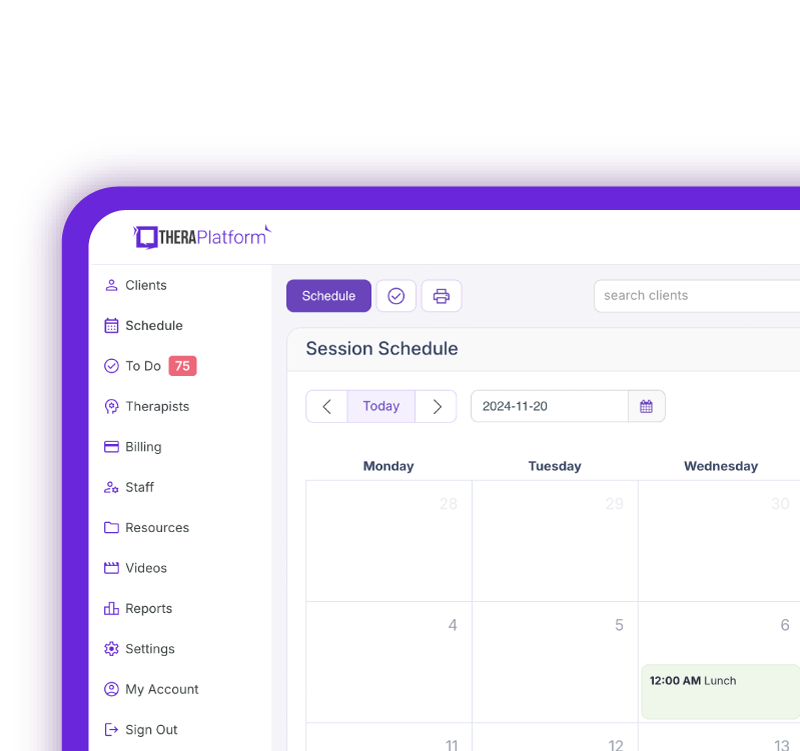
- Using EHR systems with integrated teletherapy tools, such as TheraPlatform, can help therapists conduct secure and engaging teletherapy sessions and streamline admin tasks.
→ Click Here to Enroll in My Free On-Demand Top to Bottom Teletherapy Video Course [Enroll Now]
Types of online counseling jobs
While all online counseling jobs involve performing psychotherapy, the format, pay, and responsibilities can vary significantly depending on the type:
Self-contained teletherapy platforms
Self-contained platforms are probably the most popular online format. Examples are BetterHelp and Talkspace. Therapists are expected to perform virtual video and voice therapy, as well as live chat and text with clients.
It is not a traditional therapy model, and counselors must be flexible in their availability for clients who may want a quick chat or text. These types of platforms hire counselors as independent contractors, and therapists should expect significantly less pay for their work. The biggest advantage of these types of platforms is built-in referrals and work flexibility.
Streamline your practice with One EHR
- Scheduling
- Flexible notes
- Template library
- Billing & payments
- Insurance claims
- Client portal
- Telehealth
- E-fax

Insurance-based teletherapy platforms
Insurance-based platforms, such as Headway and Rula, do not employ or contract counselors. Instead, they handle insurance credentialing and billing on behalf of therapists who maintain their own private practices.
They contract their rates directly with insurance providers, and counselors will earn more money per client than they do on a self-contained platform, but less than in an independent private practice. Counselors should not expect many referrals from these platforms, aside from those obtained through insurance panels. This is a more traditional therapy model with the platform essentially handling the insurance and billing.
Group private practices
This is the most established format for online (and in-person) counseling. Each practice operates independently and has its own rules that therapists have to follow. In most group practices, the therapist acts as an independent contractor and may or may not accept insurance.
As a result, a therapist in private practice will likely make the most money. They will adhere to a conventional therapy schedule of virtual and in-person therapy sessions. Although some group practices may help with billing and credentialing, the disadvantage of a group private practice is that the counselor may have to manage their own insurance, billing, and referrals.
Job type | Best for | Pros | Potential drawbacks |
|---|---|---|---|
Self-contained teletherapy platforms | Therapists seeking flexibility and built-in referrals | Flexible schedule, steady client flow, minimal marketing | Lower pay, contractor status, frequent messaging outside sessions |
Insurance-based platforms | Private practice therapists who want insurance support | Credentialing and billing assistance, higher reimbursement than marketplace platforms | Fewer referrals, lower reimbursement than fully independent practice |
Group private practices | Therapists who prefer a traditional practice model | Highest earning potential, established team environment, structured scheduling | May require managing referrals, credentialing, or billing, depending on the practice |
Skills needed for teletherapy roles
Counselors may train for years to perform therapy, but teletherapy requires an additional set of skills.
Technological proficiency
Online counseling requires knowledge of much more than basic video conferencing. Therapists need to exhibit competency in the many tools they will use as part of their remote practice. For example, if you use an electronic health record (EHR), such as Theraplatform, do you know how to help clients navigate it and troubleshoot issues that may arise?
Do you have an understanding of how you implement the Health Insurance Portability and Accountability Act (HIPAA) standards in a virtual world? Teletherapy also requires the use of interactive digital tools (e.g., screen sharing and digital whiteboards) to transmit information and engage with your client.
Counselors must exhibit proficiency in these technologies, or their effectiveness will surely suffer.
Practice Management + EHR + Telehealth
Manage more in less time in your practice with TheraPlatform
Digital empathy
Empathy can be difficult to display in person. Now, imagine you have to do it through a screen. Transmitting empathy is an important component of the therapeutic relationship. Counselors must make special efforts to exhibit empathy to their clients. These include more facial expression, reflective listening, and verbal encouragement (e.g., “I hear you”).
Organization
An online counseling practice can get complicated fast. Imagine having to navigate an EHR, check insurance coverage, write progress notes and treatment plans, correct technological snafus, and actually conduct therapy at the same time.
It is a lot, even for those with superior executive functioning skills. Counselors must make the time and effort to organize so they do not feel overwhelmed. It is highly recommended that therapists invest in a HIPAA-compliant practice management platform, which makes it easier to perform all their necessary tasks.
Free Resources for Therapists
Click below and help yourself to peer-created resources:

Licensed professionals
All online platforms require therapists to be licensed to practice therapy. Licenses are obtained through the state boards for the licensing agency of your profession (e.g., licensed professional counselors, clinical social workers, psychologists, etc.).
Where to find online counseling jobs
Job boards
Online job boards, such as those offered by Indeed, Ziprecruiter, and LinkedIn, list numerous online counseling jobs daily. Clinicians can sign up with keywords like "remote therapy” and “teletherapy” to get notified when these types of jobs become available.
Teletherapy platforms
If you know which therapy platform you want to work for, you can apply directly on their website. Direct application to sites like BetterHelp, Talkspace, and CounselingNow will yield quick replies.
Insurance and billing platforms
Therapists can apply directly to these platforms (e.g., Alma, Headway) to connect themselves to insurance companies that will provide them with referrals.
Therapist directories
While not a job board, therapist directories such as Psychology Today and Therapy Den are used by millions of people in the United States to find therapists. By publicizing your expertise as a remote practitioner, clients are more likely to find you for online counseling.
Pros and cons of remote therapy work
There are several advantages and disadvantages that remote therapy poses for therapists:
Pros
- Decreased costs. Online therapy removes the need for a physical office where you have to pay rent. It also avoids commutes that cost counselors time and money.
- Expanded reach. Therapists can treat anyone within their state licensing jurisdiction, increasing the pool of available clients.
- Fewer no-shows. Online counseling results in fewer no-shows, likely due to the convenience of attending remote sessions.
Cons
- Distractions. In an office setting, the therapist and client are alone in a comfortable room, free from distractions. In a virtual environment, the potential for distractions increases significantly. Children, pets, TV, and phones are among the variables that can distract from the session.
- Crisis management. If a client experiences a crisis situation (e.g., suicidality), the therapist is not physically present to address the problem and may have difficulty accessing local emergency services or support resources.
- Fewer non-verbal cues. People don’t verbally express everything they are feeling. Therapists use the client’s body language to help assess overall emotional functioning. When you can only see a person’s face and shoulders, those non-verbal cues are severely limited.
- Technology issues. While technology makes teletherapy possible, technological problems can disrupt a counseling session. Wifi connection issues, platform glitches, and therapist/client ignorance contribute to technological challenges that can negate the effectiveness of teletherapy.
Tips for looking for online counseling jobs
The following suggestions will help counselors looking for online counseling jobs:
Be prepared
There are certain steps therapists can take so that they are ready for online work:
- Have a license in the state you want to practice.
- Use a HIPAA-approved teletherapy platform, such as TheraPlatform.
- Have a comfortable and distraction-free setting for performing remote therapy.
- Possess liability insurance that covers telehealth.
Assess your fit for the type of job
Remote counseling can be drastically different depending on the type. Therapists need to educate themselves about the different options and then see what works best for them. For example, some platforms may offer seemingly unlimited referrals but at a reduced pay rate.
A group practice may provide a more traditional therapy format, whereas a self-contained counseling platform will require you to do a lot of texting and live chatting. Ultimately, you have to decide what you want (and what you don’t want) and choose accordingly.
Use Reddit
It can be difficult to get accurate information about different remote job platforms. A lot of the information on the internet is provided by the platforms themselves. However, social media offers unfiltered views of different online job options. A particularly good source for honest reviews is the Reddit forum for therapists.
Choosing the best HIPAA-compliant teletherapy platform
Telehealth use has skyrocketed since the pandemic, with teletherapy emerging as a trusted, convenient, and secure alternative to in-person care for both children and adults. Therapists and clients report high satisfaction, and teletherapy now accounts for 13–17% of U.S. healthcare visits.
To protect privacy, providers must use HIPAA-compliant video platforms. The top platforms not only secure sessions with encryption but also support scheduling, billing, documentation, and client portals to streamline practice management.
The best teletherapy platforms go beyond video conferencing. By combining compliance, reliability, stable video, resources, games and practice management tools, they help therapists deliver care that’s safe, effective, and adaptable to modern client needs.
Marketing is also another aspect of owning a practice that can be conducted through a secure HIPAA-compliant platform as you can communicate with existing clients via chat, email and more.
Why therapists choose TheraPlatform as their teletherapy platform
Whether for solo practice or larger clinics, therapists choose TheraPlatform for its blend of usability, flexibility, and robust telehealth tools.
Watch this video to discover how TheraPlatform elevates Telehealth sessions
Here are top reasons why therapists choose TheraPlatform for teletherapy:
- Efficiency and convenience: Everything down to payments, scheduling, documentation, and insurance claims is managed in one integrated platform, saving time and reducing friction.
- Security and compliance: TheraPlatform is fully HIPAA and PIPEDA compliant, with encrypted video sessions, secure data storage, and 24/7 monitoring for peace of mind.
- Engagement tools: Built-in interactive features like whiteboards, games, media sharing, screen annotation, and therapy-specific “apps” enhance client engagement especially useful in pediatric and speech therapy.
- Client-centered functionality: The secure client portal empowers clients to book sessions, complete forms, submit documents, and make payments, reducing admin work for the therapist.
- Customization and flexibility: Therapists can create and customize templates for notes, treatment plans, and intake forms allowing them to tailor workflows to their practice style.
- All-in-one practice management: Combines telehealth, EHR, billing, insurance, scheduling, and documentation, eliminating the need for multiple tools or software.
- Therapy-specific design: Unlike generic telehealth platforms, TheraPlatform is purpose-built for mental health, speech therapy, OT, PT, and more with features tailored to each specialty.
- Professional credibility: Recording features, branded portals, and compliance tools help therapists present a more professional, trustworthy experience to clients.
- Positive user experience: Therapists appreciate having everything in one place and often report a smoother workflow, fewer tech issues, and faster onboarding.
What therapists are saying about TheraPlatform telehealth
Therapists praise TheraPlatform for its ease of use, seamless scheduling, and built-in billing tools like superbills. They value the platform’s features including intuitive charting, customizable notes, and interactive telehealth tools as well as the responsive support team, which listens to feedback and implements updates.
Many highlight that the platform offers the best of all worlds, combining excellent video conferencing with resource sharing and an engaging, client-centered teletherapy experience.
"There's seriously no better platform out there! Easy to use … syncs to your personal schedule, provides superbills …"- Coastlinespeechtherapy (Source)
“It is not just the platform, it is the team behind TheraPlatform, always willing to help and receptive to feedback to bring updates requests to live,” Orly, Smarty Therapy PC (Source)
"The video conferencing is excellent and the ability to share resources and the interactive screen make Telehealth a rich experience."- Kathy J. (Source)
"TheraPlatform has been the best of all worlds! … intuitive charting, in-system billing, customizable notes …"-Kendrah B. (Source)
Streamline your practice with One EHR
- Scheduling
- Flexible notes
- Template library
- Billing & payments
- Insurance claims
- Client portal
- Telehealth
- E-fax
Resources for mental health therapists
Theraplatform is an all-in-one EHR, practice management and teletherapy solution with AI-powered notes and Wiley Treatment Planners that allow you to focus more on patient care. With a 30-day free trial, you have the opportunity to experience Theraplatform for yourself with no credit card required. Cancel anytime. They also support different industries including mental and behavioral health therapists in group practices and solo practices.
More resources
- Therapy resources and worksheets
- Therapy private practice courses
- Ultimate teletherapy ebook
- The Ultimate Insurance Billing Guide for Therapists
- The Ultimate Guide to Starting a Private Therapy Practice
- Insurance billing 101
- Practice management tools
Free video classes
- Free on-demand insurance billing for therapist course
- Free mini video lessons to enhance your private practice
- 9 Admin tasks to automate in your private practice
References
Greenup, E. P., & Best, D. (2025). Systematic review and meta-analysis of no show or non-attendance rates among telehealth and in-person models of care. BMC health services research, 25(1), 663. https://doi.org/10.1186/s12913-025-12826-2
Niezink, L. & Train, K. (2022, February 1). Psychology Today. Building empathy online:
How to build rapport and ensure mutual understanding in online meetings. https://www.psychologytoday.com/us/blog/empathic-intervision/202202/building-empathy-online
Page, C., Stamm, K., & Assefa, M. (2024, September 1). Datapoint: Telehealth and hybrid practice are here to stay. Monitor on Psychology, 55(6). https://www.apa.org/monitor/2024/09/telehealth-hybrid-practice
Theraplatform. Teletherapy technology. https://www.theraplatform.com/blog/332/teletherapy-technology
FAQs about online counseling jobs
What qualifications do I need for an online counseling job?
Most employers require an active professional license, telehealth competency, a HIPAA-compliant workspace, and liability insurance that covers telehealth services.
Where can therapists find remote counseling jobs?
Therapists can search job boards, apply directly to teletherapy or insurance platforms, join group private practices, and create profiles on therapist directories like Psychology Today or TherapyDen.
What are the biggest challenges of online counseling?
Common challenges include managing technology issues, handling crises remotely, maintaining client engagement, and working with fewer nonverbal communication cues.