Treatment plan for anxiety

A treatment plan for anxiety can assist with one of the most common mental health issues. Almost one-third of adults in the United States will have an anxiety disorder at some point in their lives. Writing a treatment plan for an anxiety issue encompasses particular goals and interventions that differ from other problems.
Summary
- An effective anxiety treatment plan includes clearly defined sections such as client information, presenting problems, diagnosis, goals, objectives, interventions, and strengths. Each section plays a distinct role in guiding the therapy process and ensuring personalized care.
- Long-term goals should be SMART (Specific, Measurable, Achievable, Relevant, Time-bound), while short-term objectives or action plans help clients make tangible progress week to week. Examples include practicing mindfulness or completing exposure tasks related to social anxiety. Download my free SMART goals worksheet.
- Common anxiety interventions—such as CBT, exposure therapy, relaxation training, and ACT—should be clearly linked to the client’s treatment goals and tracked for effectiveness. Integration of techniques with session and homework activities is essential.
- Therapists must regularly review and revise the plan based on new insights, client progress, or diagnostic changes. It should reflect not just challenges but also strengths and available resources, promoting a comprehensive and flexible roadmap for care. Using an EHR like TheraPlatform can help therapists easily update and manage documents like treatment plans.
Streamline your practice with One EHR
- Scheduling
- Flexible notes
- Template library
- Billing & payments
- Insurance claims
- Client portal
- Telehealth
- E-fax

Treatment plan for anxiety domains
Client information
This section is pretty straightforward. It includes name, date of birth, and date of intake. Additionally, any notable psychiatric history should be noted. Prior treatment, hospitalizations, and psychotropic medications related to anxiety disorders should be emphasized.
Presenting problem
The presenting problem is the reason that the client is seeking therapy. It is important to note that this issue might differ from the therapist’s assessment or the individual’s diagnosis. For example, a client who is eventually diagnosed with generalized anxiety may come in for treatment because they have trouble making and keeping friendships.
Assessment/diagnosis
This part relies on the diagnostic criteria and the clinician’s professional judgment. Taking all the information into account, what does the therapist believe are the anxiety issues the client is facing? Therapists may feel pressure to assign a diagnosis because insurance companies will ask for one to reimburse therapy sessions. However, the therapist should feel empowered to change the diagnosis—if appropriate—after getting to know the client better.
Practice Management + EHR + Telehealth
Manage more in less time in your practice with TheraPlatform
Goals for treatment plans for anxiety
Goals in a treatment plan for anxiety are broad problems the client is attempting to address. They are usually long-term, and the client aspires to meet them throughout treatment. That doesn’t mean, however, that they are so general that they are hard to define. Ideally, goals follow the SMART (Specific, Achievable, Relevant, Time-bound) format. This provides clients with a clear target to achieve their goals. Here are three examples of goals on a treatment plan for anxiety disorders:
1) For generalized anxiety disorder (GAD): Reduce anxiety symptoms to non-clinical levels in six months.
2) For panic disorder: Reduce panic attacks from five times to two times per week by (include date here).
3) For social anxiety disorder: Increase participation in social activities by 50 percent within four months.
See how AI assessments can save therapists time
Objectives/action plans in a treatment plan for anxiety
Objectives in a treatment plan for anxiety are more immediate. They are specific acts the client aims to achieve to address their long-term goals. These are sometimes also termed action plans. They should be formulated with the individual and performed every week.
The client must be made aware of the value of their objectives, or their motivation to complete them may wane.
Part of each therapy session will be spent reviewing the client’s progress in meeting their objectives. As such, they are often incorporated as homework. Here are examples of objectives related to the specific goals mentioned above:
Generalized anxiety disorder
a) Practice mindfulness meditation for 15 minutes once a day.
b) Fill out cognitive thought record related to anxious thoughts and feelings daily.
c) Practice “worry time” each night a half hour before bed.
Panic disorder
a) Recognize and list your physical and cognitive symptoms of a panic attack.
b) Practice and utilize relaxation techniques, including deep breathing and progressive muscle relaxation as relevant situations arise.
c) Create a mantra to address distorted thoughts at the onset of panic symptoms.
Social anxiety disorder
a) Create a hierarchy of anxiety-provoking social situations.
b) Spend 15 minutes each day visualizing success in a social situation (imaginal exposure).
b) Engage in one social situation each week according to progress on your hierarchy (e.g,
speaking to a work colleague or attending a small gathering for a short time).
Free Resources for Therapists
Click below and help yourself to peer-created resources:

Treatment plan for anxiety interventions
Interventions are the techniques that the therapist (or other professional) is using to treat the client’s anxiety. These reflect the work that the client is doing in session and may continue outside of session with homework that meets their objectives. Common examples of interventions for anxiety may include:
1) Cognitive-behavioral therapy emphasizing cognitive restructuring.
3) Relaxation exercises
5) Acceptance and Commitment Therapy (ACT)
6) Medication management
7) Lifestyle changes, such as improved sleep hygiene, exercise, and limiting caffeine.
Note: The particular intervention being implemented is often listed alongside each goal. For example, for GAD, the primary interventions could be cognitive-behavioral therapy and relaxation exercises. Some therapists might also state the intervention with the objective as they are usually closely related.
Strengths/resources
A treatment plan for anxiety isn’t all about weaknesses that the client must improve. Knowing someone's personal strengths and external resources is integral to their outlook for success. Therapists can have a separate section to list resources and whether they have been utilized. Goals and objectives may even involve the client learning to employ resources that they have ignored in the past.
Some examples of strengths might include:
- Strong family involvement
- Motivation to change
- Resilience
- Possesses the intellectual ability to understand the cognitive processes involved in CBT.
- Prior relationship with a medical professional who prescribes psychotropic medication.
Progress and adjustments to the treatment plan for anxiety
Every treatment plan for anxiety must have a place to document client progress at different intervals. In fact, it is not uncommon to have a space after goals and objectives to list outcomes, adjustments, and extensions to deadlines. Along with new goals and objectives, completed tasks should also be noted.
Note: One of the mistakes therapists often make is never changing the client’s treatment plan for anxiety after they learn additional information that may impact the diagnosis, goals, and objectives. The treatment plan is meant to be a fluid document that is updated whenever necessary.
Integration of a treatment plan for anxiety
One crucial aspect of a treatment plan for anxiety is how all the parts work together. For example, it should be clear how the interventions are related to achieving the goals and objectives. Measuring the client’s progress towards those goals serves as a feedback loop.
Additionally, certain strengths may allow particular interventions to be used, or their utilization may become a separate objective. As such, it is common for a treatment plan for anxiety is to be organized with a goal, objectives, interventions, and progress all in one section. A well-designed treatment plan for anxiety serves as a blueprint for the client’s current treatment and a road map for other professionals who serve the client in the future.
How EHR software can help with treatment plans for anxiety
Electronic health record (EHR) and practice management software, such as TheraPlatform, can help therapists save time when creating counseling treatment plans.
Benefits of using EHR for a treatment plan for anxiety
Consistent treatment plans for anxiety
Having an EHR with built-in assessments and templates for adults and children can help mental health therapists create individualized treatment plans for anxiety more efficiently.
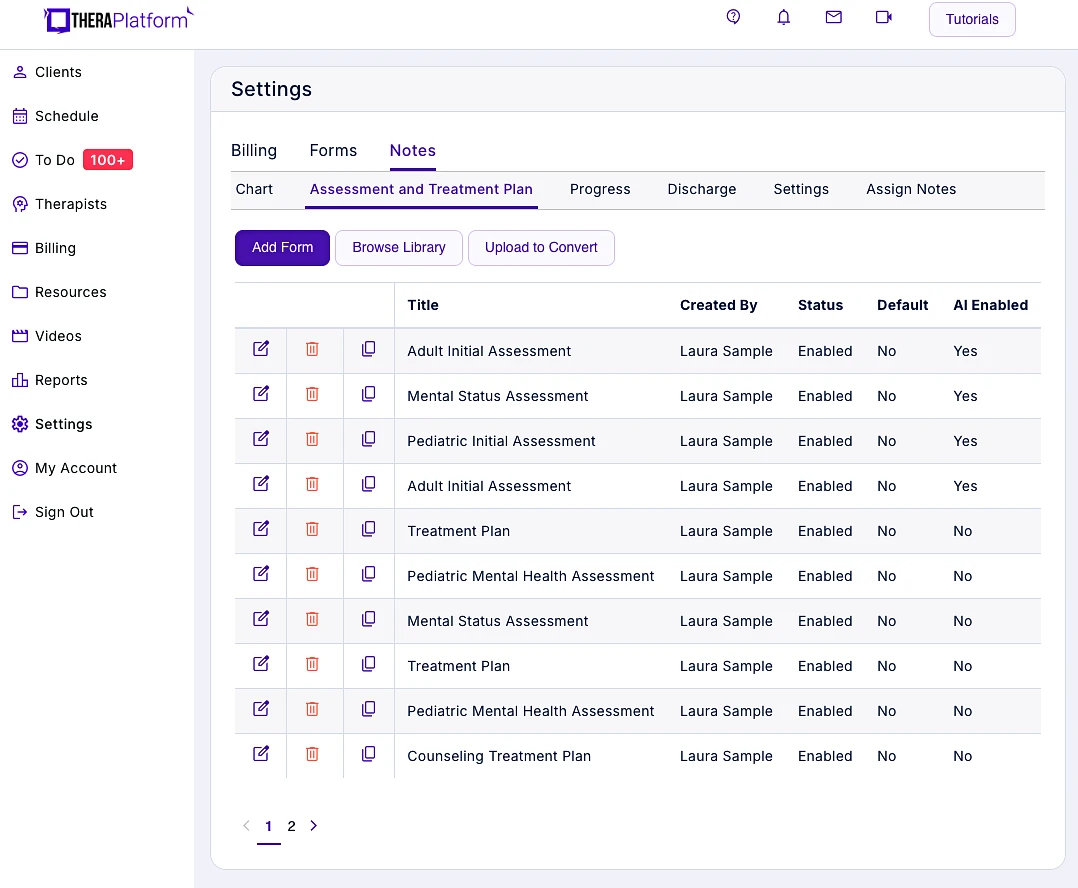
Screenshot of TheraPlatform’s built-in assessment template library. Assessments are one of dozens of types of templates that can be used as is or modified to meet the needs of a therapist in private practice.
Customizable treatment plan builder
Many therapists with niche private practices can use TheraPlatform’s flexible treatment plan builder to create specialized plans. In addition to the ability to edit templates, therapists can build any template from scratch to meet their private therapy practice needs and preferences.
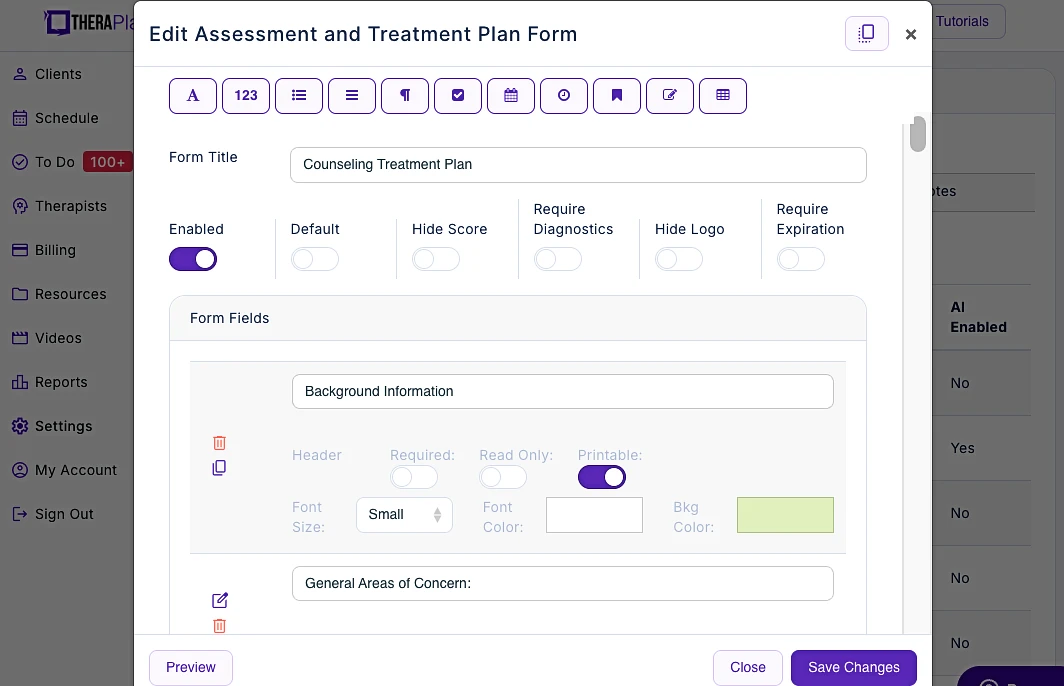
Screenshot of TheraPlatform’s counseling treatment plant builder. Use existing templates to customize your counseling treatment plan for a specific client or build your own from scratch.
HIPAA-compliant storage of counseling treatment plans
Creating and storing your counseling treatment plans in a secure, encrypted system to prevent breaches will ensure your clients’ data is safe and give you peace of mind. TheraPlatform follows bank-level security standards and provides private practices with a signed BAA.
Having a secure way to store your treatment plan is an easy decision and can be easily submitted to insurance.
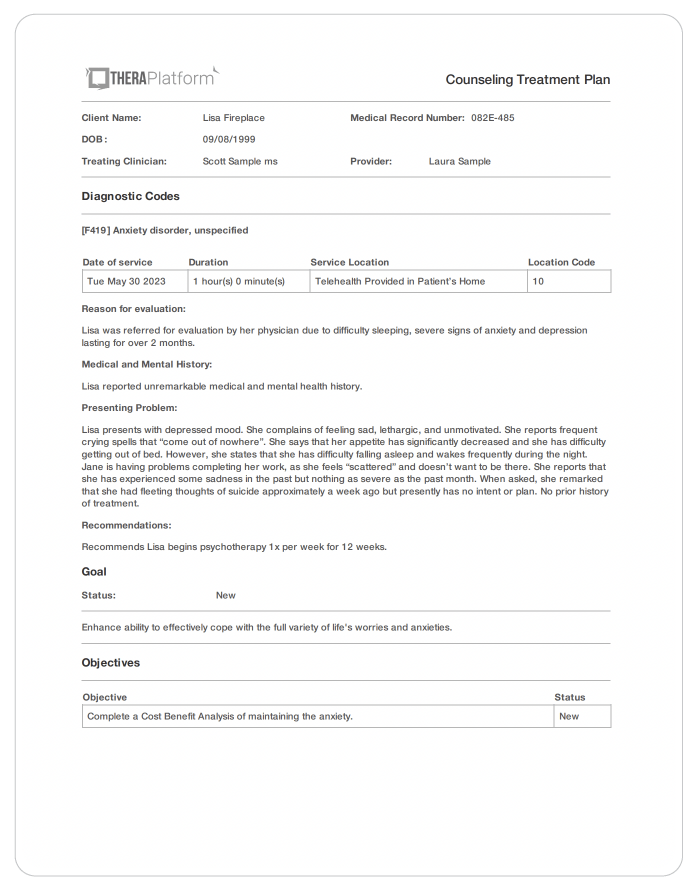
Screenshot of a completed counseling treatment plan created with TheraPlatform. Therapists can quickly create high-quality counseling treatment plans using templates pre-populated with nearly 1,000 statements.
Save time with pre-populated treatment plans
Through Wiley Treatment Planner integration, creating treatment plans in TheraPlatform is a great time saver. Mental health therapists can customize treatment plans using reliable, evidence-based objectives and interventions and receive home suggestions to assign to clients.
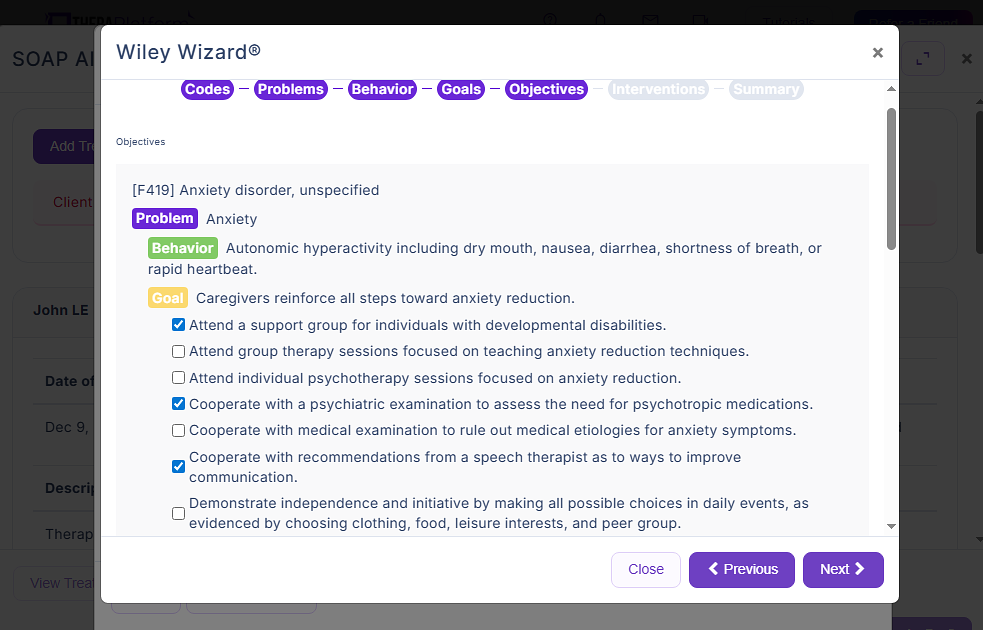
Screenshot of TheraPlatform’s Wiley Treatment Planner integration. Wiley offers thousands of prewritten, evidence-based treatment goals, objectives, and interventions for mental health therapists in private practice.
Requesting client signatures is seamless
TheraPlatform also allows counselors to request signatures from the client on treatment plans via a secure client portal.
And the process is easy.
- The clinician clicks a button to request a signature.
- The client receives an email notification that a doc is available for signature
- The client securely logs in, signs the treatment plan and the signed plan is automatically saved for the clinician under the client’s chart.
Save time with e-fax
Eliminate maneuvering between two software programs with an integrated solution like TheraPlatform that has efax integrated into its EHR. This integration saves time and lowers costs as incoming and outgoing documents like notes, and other documents are securely sent electronically.
Streamline your practice with One EHR
- Scheduling
- Flexible notes
- Template library
- Billing & payments
- Insurance claims
- Client portal
- Telehealth
- E-fax
Resources for mental health therapists
Theraplatform is an all-in-one EHR, practice management and teletherapy solution with AI-powered notes and Wiley Treatment Planners that allow you to focus more on patient care. With a 30-day free trial, you have the opportunity to experience Theraplatform for yourself with no credit card required. Cancel anytime. They also support different industries including mental and behavioral health therapists in group practices and solo practices.
More resources
- Therapy resources and worksheets
- Therapy private practice courses
- Ultimate teletherapy ebook
- The Ultimate Insurance Billing Guide for Therapists
- The Ultimate Guide to Starting a Private Therapy Practice
- Insurance billing 101
- Practice management tools
Free video classes
- Free on-demand insurance billing for therapist course
- Free mini video lessons to enhance your private practice
- 9 Admin tasks to automate in your private practice
References
Gupta, S. (2023, August 10). Verywell Mind. Worry time: The benefits of scheduling time to stress. https://www.verywellmind.com/worry-time-the-benefits-of-scheduling-time-to-stress-5267979
National Institute of Mental Health. Any anxiety disorder: Prevalence of any anxiety disorder among adults. https://www.nimh.nih.gov/health/statistics/any-anxiety-disorder#:~:text=Prevalence%20of%20Any%20Anxiety%20Disorder%20Among%20Adults,-Based%20on%20diagnostic&text=An%20estimated%2031.1%25%20of%20U.S.,some%20time%20in%20their%20lives
FAQs about treatment plans for anxiety
What should be included in a treatment plan for anxiety?
A treatment plan should include client information, presenting problems, assessment/diagnosis, long-term goals, short-term objectives, interventions, strengths/resources, and a section for tracking progress and updates.
How are goals and objectives different in anxiety treatment?
Goals are broad, long-term outcomes (often written as SMART goals), while objectives are short-term, actionable steps clients work on weekly to move toward those goals.
How often should an anxiety treatment plan be updated?
Treatment plans should be reviewed regularly and updated whenever there are changes in diagnosis, client progress, or therapeutic direction to keep care personalized and effective.