Therapy activities

Therapy activities are used by private practice counselors to engage clients as an essential component of a successful treatment outcome. To engage clients in therapy, clinicians must work to build a deep connection and a therapeutic alliance with their clients.
Summary
- Therapy activities increase engagement and retention by helping clients feel more comfortable, connected, and motivated to participate in treatment.
- Interactive tools like games, mindfulness, music, art, and videos support skill-building, emotional expression, and therapeutic alliance.
- Therapy activities can be adapted to fit treatment goals, developmental level, and client preferences, making them flexible across diagnoses and settings. Download my free family activities sheet.
- Using structured activities in both in-person and teletherapy sessions can reduce anxiety, improve collaboration, and enhance overall treatment outcomes.
Streamline your insurance billing with One EHR
- Claim batching
- Auto claims
- Automated EOB & ERA
- Real-time claim validation
- Real-time claim tracking
- Aging and other reports
When clients feel more engaged in therapy, they will more likely bond with the therapist, collaborate on treatment goals, and participate in treatment. They will also be more likely to remain in treatment and have greater treatment satisfaction.
Clinicians can work on engaging with their clients outside of the therapy session as well as during the session. Using interactive therapy activities is one way mental health private practice clinicians can engage with clients during sessions.
Playing games in sessions
Therapy activities can offer many benefits and opportunities to engage with clients in a fun and interactive way.
Therapy activities in sessions can help to:
- Build the rapport between clients and therapists in a less intimidating way
- Encourage conversation among the game players
- Remove some of the inhibition clients may feel about therapy
- Foster a connection between the game players
- Give the space for the therapeutic relationship to develop and grow
- Teach skills relevant to the treatment plan (ex: coping skills, CBT skills, social skills, communication skills).
There are different options for selecting therapy activities to use in a session. Mental health private practice therapists may choose to use games specifically designed for therapy, create a unique game, or use store-bought games.
An existing game can be modified to fit a therapeutic purpose. Modifications can be made to many aspects of a game such as rules, game playing pieces, game cards, or the game board.
If a mental health private practice therapist chooses to modify an existing game or create a unique game, several important factors should be considered:
- The therapeutic purpose of the game (ex: teach a skill, identify triggers, identify feelings, build rapport)
- Incorporating the treatment purpose into the therapy activities
- Is it developmentally appropriate for the target clients who will play the game?
Practice Management + EHR + Telehealth
Manage more in less time in your practice with TheraPlatform
Using guided meditations during session
Using guided meditations helps the client feel more connected to the therapist. It creates an opportunity for a mindful interaction between the therapist and client. They can discuss how the client feels before and after the mediation. The mental health private practice therapist can answer any questions the client may have regarding the mediation experience or process.
If a client feels intimidated about meditation, incorporating meditation into the session may make it a more comfortable experience for the client. With the support and guidance of the therapist in session, the client may feel more confident and comfortable with meditation over other therapy activities. They may be more likely to follow through with meditation outside of the therapy session.
To guide the meditation, the mental health private practice therapist can use a recording of a meditation. Or, if the therapist has the appropriate training, the therapist can guide the meditation.
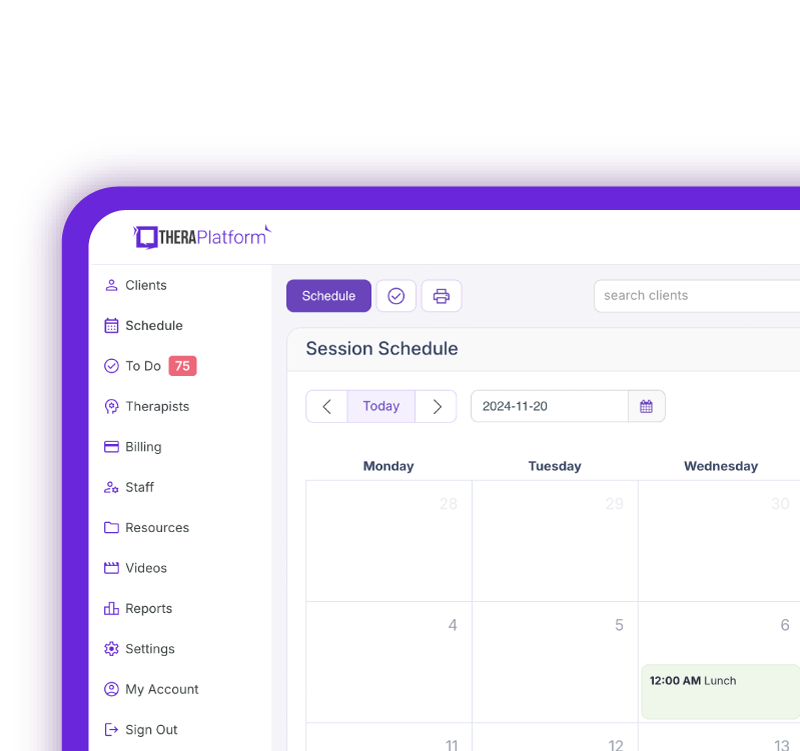
Watch how built-in apps and games help deliver engaging sessions in TheraPlatform
Mindfulness exercises in session
There are many mindfulness-based therapy activities that mental health private practice therapists can use to interact with clients during a therapy session. Clinicians can use the time in a session to teach, guide, and model mindfulness as part of their mental health private practice.
The mental health private practice therapist can observe the client’s response to the therapy activities, provide feedback, and assign relevant homework based on the direct experience in the session. It also allows the opportunity for questions and discussion on the client’s emotional response to the exercises.
Some mindfulness therapy activities to include in a session are:
- Mindful eating such as the Raisin Exercise
- Mindful breathing exercises
- Mindful seeing
- Mindful walking
- 5 Senses
Free Resources for Therapists
Click below and help yourself to peer-created resources:

Music therapy
Playing music during a therapy session can create opportunities to develop a more cohesive relationship and connection between the therapist and client as well as stimulate progress on treatment goals.
Music therapy helps to create the space for thoughts and feelings to flow more freely. Therapists may use therapy activities related music in session to:
- Teach therapeutic skills relevant to the treatment plan
- Encourage clients to slow down and just listen
- Generate conversations about the meanings of lyrics and how the client relates to the lyrics
- Create conversations about thoughts and feelings evoked from the music
- Relaxation
- Casual conversations about the music to build rapport
- Therapeutic discussions about memories the music may trigger
Using art in session
Art in therapy is a creative outlet that can help clients to access and process their thoughts, emotions, and experiences. Through therapy activities like art, people can learn more about their inner selves and improve their well-being using creative expressions. Art can help people find relief from emotions, pain, and crises and can be conducted as part of an in-office session or in teletherapy.
Therapists can use the art that clients create to improve their therapeutic connections and
stimulate relevant conversations surrounding the artwork. When therapists introduce art into a therapy session, clients can experience a greater sense of self-awareness and self-esteem. It can help clients to process strong emotions, decrease anxiety, and lower stress levels with the support of the therapist in the session.
Research has identified many benefits of using art therapy activities in a mental health private practice.
Some of the benefits are:
- Decreased pain
- Decreased stress levels
- Improved quality of life
- Development of new coping skills
- Improved coping skills
- Improved mood stability
- Improved mental functions
Therapists can incorporate art in a variety of ways during the session.
Some ways to incorporate art are:
- Ask the client to complete it as a homework assignment and then bring it into the next session for a discussion on thoughts and emotions evoked while creating the piece
- Create the art during the session using a preferred format (drawing, painting, coloring, clay, collage, etc.) and then discuss the client’s thoughts and feelings while creating the art
- Combine art and music in a session
- Provide verbal prompts to the client to create specific art consistent with treatment goals (ex: paint with colors that reflect your present mood, draw your thoughts regarding the fight last night)
Practice Management + EHR + Telehealth
Manage more in less time in your practice with TheraPlatform
Playing videos
Another interactive option for a mental health private practice therapist is video clips. Video clips are another therapy activities option as well as a relevant way to engage clients in therapeutic discussions. Videos can decrease anxiety about discussing the topic in the video, provide another expert voice to support the therapist’s discussions, and engage the client in the session.
Therapists can play video clips during in-office or teletherapy sessions to teach concepts, guide discussions, or demonstrate certain skills to clients.
Some suggested ideas for using video clips include:
- Teaching about a concept for therapy (ex.: mindfulness, CBT concepts, information related to a diagnosis)
- Stimulate discussion on a therapeutic topic related to the treatment plan (ex: grief reaction, anxiety, divorce)
- Demonstrate certain skills (ex: anger management techniques, communication techniques, fair fighting)
Video clips may come from:
- Clips from movies or television programs
- Accessible and appropriate videos available on the internet (ex: YouTube, Ted Talks)
- Downloads available for purchase
Interactive activities can remove anxiety and inhibition surrounding the therapy session and help people feel more comfortable with participating and attending sessions. Using interactive activities in therapy can offer an opportunity to engage clients and improve treatment outcomes.
Streamline your practice with One EHR
- Scheduling
- Flexible notes
- Template library
- Billing & payments
- Insurance claims
- Client portal
- Telehealth
- E-fax
Resources
TheraPlatform is an all-in-one EHR, practice management, and teletherapy software with AI-powered notes built for therapists to help them save time on admin tasks. It offers a 30-day risk-free trial with no credit card required and supports mental and behavioral health, SLPs, OTs, and PTs in group and solo practices.
More resources
- Therapy resources and worksheets
- Therapy private practice courses
- Ultimate teletherapy ebook
- The Ultimate Insurance Billing Guide for Therapists
- The Ultimate Guide to Starting a Private Therapy Practice
- Insurance billing 101
- Practice management tools
Free video classes
- Free on-demand insurance billing for therapist course
- Free mini video lessons to enhance your private practice
- 9 Admin tasks to automate in your private practice
References
Hill, M. “Using Popular Games Therapeutically.” Society for the Advancement of Psychotherapy, 2016. Accessed August 19, 2022.
Thompson, S., Bender, K., Lantry, J., and Flynn, P. “Treatment Engagement: Building Therapeutic Alliance in Home-Based Treatment with Adolescents and their Families.” Contemporary Family Therapy, June 29, 2007. Accessed August 19, 2022.
Tiret, Holly. “The Benefits Art Therapy Can Have on Mental and Physical Health.” Michigan State University Extension.May 25, 2017. Accessed August 22, 2022.
FAQs about therapy activities for mental health
What are therapy activities?
Therapy activities are interactive exercises—such as games, mindfulness practices, art, music, or videos—used by clinicians to engage clients and support therapeutic goals.
Why are therapy activities effective in mental health treatment?
They help build rapport, lower client inhibition, encourage emotional expression, and make abstract concepts like coping skills or CBT strategies more accessible.
Can therapy activities be used in teletherapy?
Yes. Many activities, including guided meditations, screen-shared games, videos, and digital art tools, work well in virtual sessions and often increase accessibility and family involvement.