
ICD-10 code for Fibromyalgia

The ICD-10 code for Fibromyalgia is used to bill for treatment for a chronic pain condition affecting 2-4% of people, especially women. It is neither an inflammatory nor an autoimmune disease.
Rather, research suggests the nervous system is highly involved in the pathophysiology of this condition and that alterations in brain chemicals such as serotonin or norepinephrine may lead to changes in response to painful sensory stimuli.
Central sensitization is expressed as hyperalgesia and allodynia. There may also be a genetic predisposition to developing fibromyalgia, which is activated by triggers such as infection, stress, trauma, illness, or injury.
Key takeaways
- The ICD-10 code for Fibromyalgia is M79.7. Accurate coding supports proper documentation, reimbursement, and continuity of care across healthcare settings.
- Diagnosis is based on clinical evaluation—not imaging or laboratory tests. Clinicians diagnose fibromyalgia by assessing widespread pain, associated symptoms, and ruling out other conditions.
- Treatment is multidisciplinary. Physical therapy, occupational therapy, counseling, exercise, sleep management, and medications can all play a role in improving function and quality of life.
- Clear documentation is essential. Medical records should support the diagnosis, describe functional limitations, and outline the patient's treatment plan and response to care. An all-in-one EHR can help physical therapists save time on documentation.
→ Enroll in My Free, On-Demand Insurance Billing for Therapists Course
The most common and well-recognized symptom of fibromyalgia is widespread pain; however, the presentation can be different for each person.
Below is a list of common symptoms of fibromyalgia:
- Severe fatigue
- Morning stiffness
- Sleep difficulties
- Brain fog (ie, “fibro fog”)
- Depression and anxiety
- Migraines or tension headaches
- Digestion problems
- Urinary changes
- Pelvic pain
- Sensory sensitivities
- Chronic low back pain
While blood tests and imaging may help rule in or out other potential origins for these symptoms, fibromyalgia does not cause abnormalities in imaging or bloodwork. Fibromyalgia is a clinical diagnosis. In the past, doctors diagnosed this condition by identifying several pain-sensitive tender points on the body.
If 11 or more of the 18 specified points elicited pain with tactile pressure, the person was diagnosed with fibromyalgia. This method has since been abandoned in favor of a survey-driven diagnosis method. If the patient has had symptoms for at least 3 months and meets the minimum criteria for widespread pain and symptom severity (see example here), the patient can be diagnosed with this condition.
Many clinicians are familiar with the impact that fibromyalgia has on their patients. Research shows that individuals with fibromyalgia experience a lower quality of life both in terms of physical function and vitality, and that the presence of depression and anxiety most significantly predicts decreased quality of life.
Topic | Details |
ICD-10-CM Code | M79.7 – Fibromyalgia |
Condition | Chronic widespread musculoskeletal pain syndrome |
Common symptoms | Widespread pain, fatigue, sleep disturbances, cognitive difficulties ("fibro fog"), tenderness |
Diagnosis | Clinical assessment based on symptoms and exclusion of other conditions |
Common treatments | Exercise, physical therapy, occupational therapy, cognitive behavioral therapy (CBT), medications, and sleep management |
Treatments for Fibromyalgia
The 2023 Clinical Practice Guideline on fibromyalgia indicates that patients with this condition should be offered a multidisciplinary treatment approach that includes education, exercise, pharmacologic and nonpharmacologic options (Evidence rating “C”).
Cognitive behavioral therapy is also recommended and has been shown to reduce pain and disability in the short and medium term (Evidence rating “A”).
Patients are often referred to physical therapy for the management of their pain symptoms. Low-intensity and low-frequency exercise, which can be increased to moderate intensity in some patients, is most effective.
A graded approach to exercise that allows for modification of volume and intensity in response to pain and fatigue flares is highly recommended. The strongest evidence exists for moderate-intensity aerobic exercise, but moderate-quality evidence suggests that aerobic, resistance, or stretching exercises alone or in combination can produce small improvements in quality of life and physical function. Myofascial release techniques may also be beneficial.
Streamline your insurance billing with One EHR
- Claim batching
- Auto claims
- Automated EOB & ERA
- Real-time claim validation
- Real-time claim tracking
- Aging and other reports

An individualized approach to physical therapy with careful prescription of exercises that do not worsen pain is essential. Movement-evoked pain is often a barrier to participating in what is typically considered one of the most effective treatments for fibromyalgia-related pain: exercise.
Research suggests that the simultaneous or solo application of TENS can improve the ability to participate in exercise and enhance the effectiveness of PT interventions to improve symptoms. Education on pacing, energy conservation, mindfulness, and referral to mental health providers are also important aspects of a holistic approach to care.
Documenting care for Fibromyalgia
ICD-10 Code for Fibromyalgia
The primary ICD-10 code for fibromyalgia is M79.7. This code should be used when the primary treatment goals are to address impairments, activity limitations, and participation restrictions that stem directly from a diagnosis of fibromyalgia.
As HIPAA-covered entities, physical therapists are required to submit ICD-10 codes if they or their patients seek reimbursement for therapy services from an insurance company. These codes identify the medical diagnosis and help payers understand why the care PTs are providing is medically necessary and therefore, reimbursable. It also assists with care coordination between providers.
While M79.7 is the most specific ICD-10 code for fibromyalgia, several other codes may be pertinent to your documentation if they describe impairments you plan to address in therapy.
Below are some examples:
- R53.1: Weakness
- M62.81: Muscle Weakness (generalized)
- M79.XX: This group of codes can be used to describe pain in various body locations
- R53.81: Physical deconditioning
- R26.2: Difficulty walking
Practice Management + EHR + Telehealth
Manage more in less time in your practice with TheraPlatform
Outcome measures
Subjective outcome measures can be an invaluable tool for tracking the impact that physical therapy interventions have on fibromyalgia symptoms and their effect on quality of life and physical functioning.
Here are a few suggestions:
- FIQR (Revised Fibromyalgia Impact Questionnaire)
- Evaluates function, overall impact and symptoms of fibromyalgia over the last 7 days
- WPI and SSS (Widespread Pain Index and Symptom Severity Scale)
- Used to diagnose fibromyalgia and track symptom distribution and severity
- SF-36
- Quantifies health status and health-related quality of life
- Patient Specific Functional Scale
- Quantifies self-reported ability to complete functional tasks
Save time with automatically scored outcome measures
Mental health therapists can use outcome measures to document progress and track key clinical indicators to help providers make data-driven decisions and improve client communication and outcomes. Additionally, outcome measures help therapists adhere to compliance requirements and provide necessary documentation to support reimbursement.
Watch this video to see how TheraPlatform’s EMR automatically scores outcome measures for you
While outcome measures clearly provide benefits to both clients and therapists, they can be time-consuming, especially if clinicians score responses manually. However, many aspects of outcome measures can be automated through an EHR like TheraPlatform:
- Sending measurements: Common assessments such as the PHQ-9 or GAD-7 can be automatically sent to clients and stored in their records, or they can be scheduled in regular intervals.
- Auto-scoring: TheraPlatform automatically scores and sums totals for common outcome measures.
- Report building and analysis: Results can be analyzed over time, with visual charts showing progress on rates of severity and session-to-session progress.
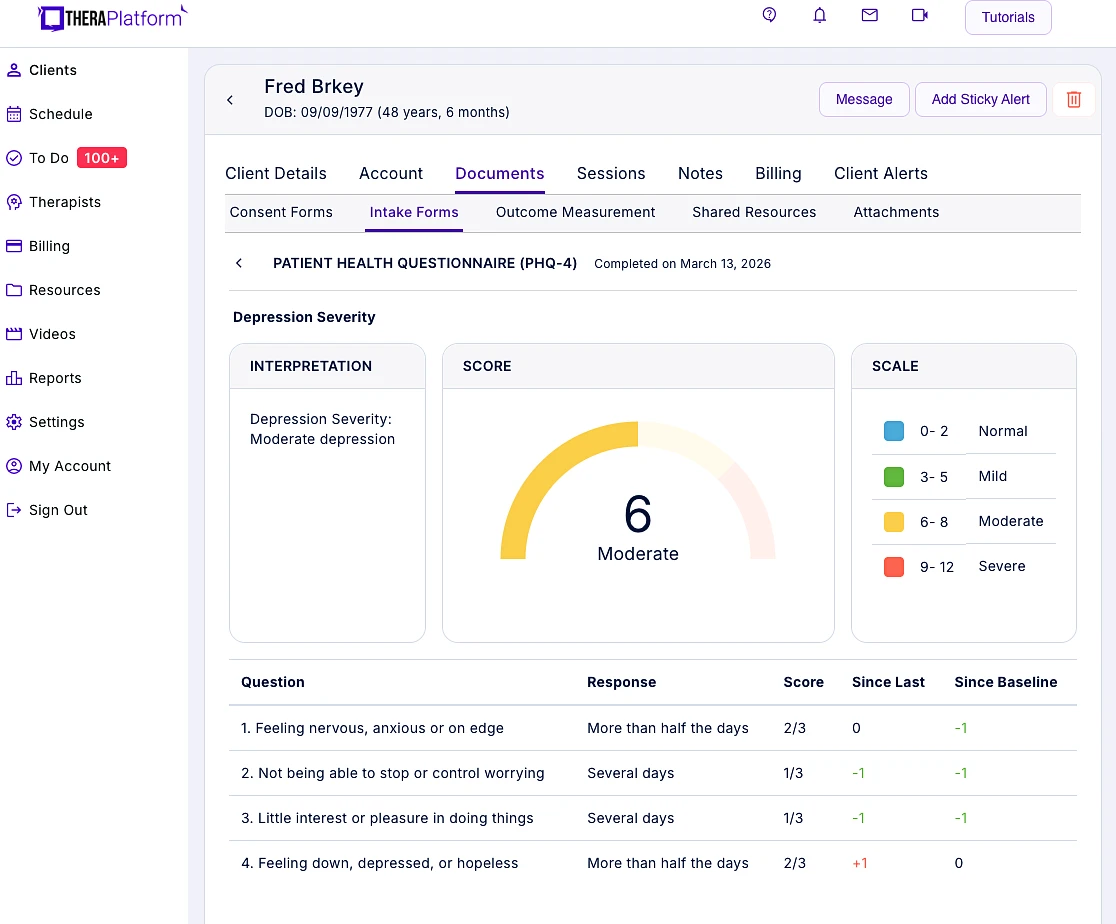
Screenshot of a scored outcome for the PHQ-4 on TheraPlatform’s EMR
By regularly using these measures, therapists can gain valuable insights, tailor interventions, and improve client outcomes while demonstrating the effectiveness of their care without manual entry.
Movement-evoked pain, fatigue, and mental health conditions commonly associated with fibromyalgia can lead to worse outcomes for physical therapy unless care is taken to attend to each of these factors in a patient-centered fashion. A holistic and individualized approach to clients with fibromyalgia, however, can significantly improve their quality of life. Physical therapists play a valuable role in the care of persons with this condition, and we can help empower our patients to take an active role in their recovery.
Free Resources for Therapists
Click below and help yourself to peer-created resources:

How EHR and practice management software can save you time with insurance billing for therapists
EHRs with integrated billing software and clearing houses, such as TheraPlatform, offer therapists significant advantages in creating an efficient insurance billing process. The key is minimizing the amount of time dedicated to developing, sending, and tracking medical claims through features such as automation and batching.
Watch this video to see how TheraPlatform’s EHR saves time on insurance billing
What are automation and batching?
- Automation refers to setting up software to perform tasks with limited human interaction.
- Batching or performing administrative tasks in blocks of time at once allows you to perform a task from a single entry point with less clicking.
Which billing and medical claim tasks can be automated and batched through billing software?
- Invoices: Create multiple invoices for multiple clients with a click or two of a button or set up auto-invoice creation, and the software will automatically create invoices for you at the preferred time. You can even have the system automatically send invoices to your clients.
- Credit card processing: Charge multiple clients with a click of a button or set up auto credit card billing, and the billing software will automatically charge the card (easier than swiping!)
- Email payment reminders: Never manually send another reminder email for payment again, or skip this altogether by enabling auto credit card charges.
- Automated claim creation and submission: Batch multiple claims with one button click or turn auto claim creation and submission on.
- Live claim validation: The system reviews each claim to catch any human errors before submission, saving you time and reducing rejected claims.
- Automated payment posting: Streamline posting procedures for paid medical claims with ERA. When insurance offers ERA, all their payments will post automatically on TheraPlatform's EHR.
- Tracking: Track payment and profits, including aging invoices, overdue invoices, transactions, billed services, service providers
Utilizing billing software integrated with an EHR and practice management software can make storing and sharing billing and insurance easy and save providers time when it comes to insurance billing for therapists.
Streamline your practice with One EHR
- Scheduling
- Flexible notes
- Template library
- Billing & payments
- Insurance claims
- Client portal
- Telehealth
- E-fax
Resources for physical therapists
TheraPlatform is an all-in-one EHR, practice management, and teletherapy software with AI-powered notes built for therapists to help them save time on admin tasks. It offers a 30-day risk-free trial with no credit card required and supports different industries and sizes of practices, including physical therapists in group and solo practices.
More resources
- Therapy resources and worksheets
- Therapy private practice courses
- Ultimate teletherapy ebook
- The Ultimate Insurance Billing Guide for Therapists
- The Ultimate Guide to Starting a Private Therapy Practice
- Insurance billing 101
- Practice management tools
Free video classes
- Free on-demand insurance billing for therapist course
- Free mini video lessons to enhance your private practice
- 9 Admin tasks to automate in your private practice
Resources
- https://rheumatology.org/patients/fibromyalgia
- https://www.fibromyalgiafund.org/
- https://www.aafp.org/afp/2023/0200/fibromyalgia
- Hassett AL, Clauw DJ. TENS vs Physical Therapy for Fibromyalgia-Not All Exercise Is Good Exercise. JAMA Netw Open. 2026 Mar 2;9(3):e262377. doi: 10.1001/jamanetworkopen.2026.2377. PMID: 41893850.
- Dailey DL, Vance CGT, Van Gorp BJ, Johnson EM, Post AA, Chimenti RL, Vance KG, Franck C, Sault J, Yarasir E, Reisinger HS, Anderson A, Anderson J, Capelle R, Crouch A, Donatelle J, Kaster D, Kepros T, Nicklies E, Rein B, Worth R, Balinski M, Lafontant DE, Slade EJ, Jiang F, Ecklund D, Neill-Hudson T, Koepp M, Costigan M, Spencer M, Archer KR, Zimmerman BM, Bayman EO, Crofford LJ, Sluka KA; Clinician Group. Transcutaneous Electrical Nerve Stimulation and Pain With Movement in People With Fibromyalgia: A Cluster Randomized Clinical Trial. JAMA Netw Open. 2026 Mar 2;9(3):e262450. doi: 10.1001/jamanetworkopen.2026.2450. Erratum in: JAMA Netw Open. 2026 Apr 1;9(4):e2614239. doi: 10.1001/jamanetworkopen.2026.14239. PMID: 41893844; PMCID: PMC13032160.
FAQs about the ICD-10 code for fibromyalgia
What is the ICD-10 code for fibromyalgia?
The ICD-10-CM code for fibromyalgia is M79.7.
Can fibromyalgia be diagnosed with a blood test or imaging?
No. Fibromyalgia is a clinical diagnosis based on symptoms, medical history, and ruling out other conditions.
What therapies are commonly recommended for fibromyalgia?
Treatment often includes exercise, physical or occupational therapy, counseling, stress management, sleep interventions, and medication when appropriate.