
Parent involvement in child therapy

Parent involvement in child therapy is something that surprises a lot of parents in that child therapy isn't just for children. Therapists often expect parents and guardians to play a significant part in the therapeutic process. The reasoning is simple: Children don't live in a vacuum. No matter the problem, children greatly affect their families and vice versa. Here is what you need to know about parent involvement in child therapy.
Summary
- Parents are key to a child's success in therapy. They motivate, reinforce therapeutic concepts at home, and provide essential support, making them integral to the child's progress. The therapy process works best when parents actively participate and stay engaged throughout.
- Therapists can include parents from the start (e.g., in the intake session), involve them in treatment planning, and suggest family meetings or joint therapy sessions. These efforts help keep parents involved and ensure therapy concepts are reinforced outside of sessions. Download my free Parent-guardian consent for a minor’s health services form.
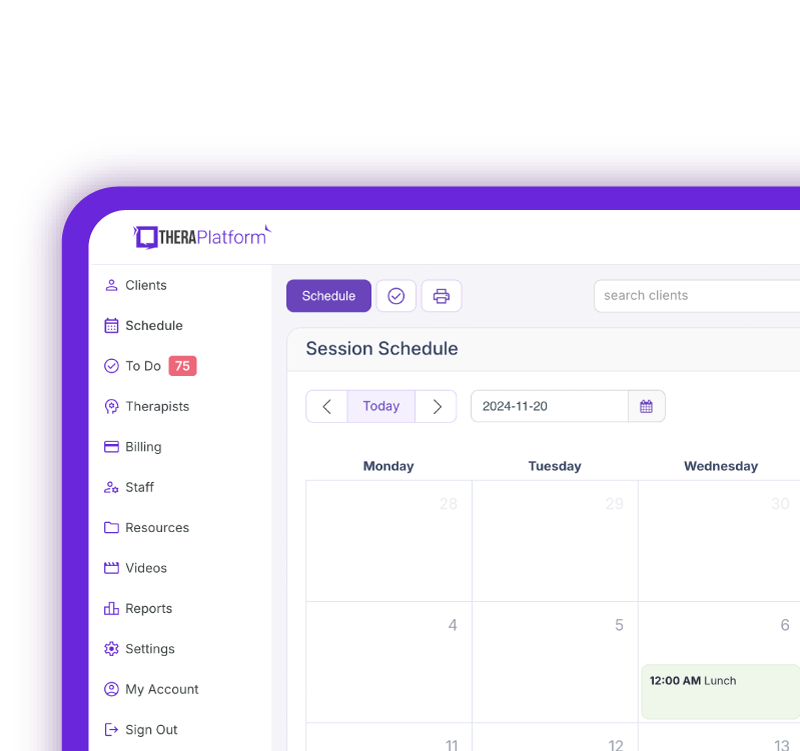
- Therapists must establish clear boundaries, such as their role as the expert in therapy, confidentiality rules, and the level of communication with parents, especially when dealing with adolescents. By leveraging a secure EHR like TheraPlatform for efficient documentation, billing, and chat, therapists can easily communicate with clients.
Streamline your practice with One EHR
- Scheduling
- Flexible notes
- Template library
- Billing & payments
- Insurance claims
- Client portal
- Telehealth
- E-fax

Why is parent involvement in child therapy necessary?
While some parents may want to drop their kids off at therapy and make a quick exit, therapists must strongly encourage them to stick around. Parents play a vital role in child therapy for the following reasons:
Motivation: Most children don't want to come to therapy. Their parents usually drag them, possibly kicking and screaming. Since parents are the primary motivators, the therapist must attempt to keep them involved. Children who see their parents are engaged are more likely to feel inspired to participate.
Reinforce therapy concepts: There are 168 hours in the week. Therapy, at best, takes up one or two. For a child to make gains, the concepts discussed in session must be reinforced outside counseling. The only way that happens is if parents know what is going on. Parents can implement treatment interventions and remind children of their goals. Reinforcing what a child learns in therapy throughout the week is a crucial parental function.
Support: Like anyone else, children need support, and no one can fill that role better than parents. Children can see if their parents are involved in therapy, and they will know if their parents are trying to help them. Plus, parents can support the child with what they may be struggling with in therapy.
Source of information: Any therapist will tell you that the more sources of information they have, the better. People have wildly diverse perspectives, and children and parents often see things differently. What's more, parents will relay information that a child may want to avoid.
Parent-child issues: Family, school, and friends are the biggest influences on a child. It is not uncommon for a child's problems to originate with parent interactions. Parental involvement allows the therapist to work on those issues together as a family.
Effectiveness: While most research indicates better therapy outcomes when parents are involved, surprisingly, that isn't always the case. Some studies see no significant difference when parents are included versus when they aren't. Some of it may be due to poor psychometric attributes of the research, but the quality of the parent involvement in therapy also needs to be considered.
Just because a parent participates doesn't mean they are having positive interactions with their child. As noted previously, some of the problems the child is having may be due to the parent's behavior.
Therapy is not forever: Therapy will not go on forever. At some point, the parents will be on their own without therapeutic assistance. An involved parent can take the lessons of treatment and pass them on to their child after counseling ends.
How to encourage parent involvement in child therapy
Here are some suggestions on how to engage parents in therapy and keep them motivated.
Include parents in the intake: Both parents often attend the first session, making it a unique opportunity to engage with them. The intake process sets the stage for the rest of the therapy. If the clinicians involve the whole family at the session, it lets the parents know that they will be included.
During the intake, the therapist should also set the expectation that the parents will be involved throughout therapy and explain how that may occur.
Request parent feedback for the treatment plan: Asking parents about their child's treatment goals shows them that their input matters. The therapist can also tell them that they will be asked to help hold their child accountable for meeting their treatment objectives. This lets them know that they will be expected to participate throughout the process, not just during the first session.
Joint therapy sessions: At times, providers may ask parents to join their child for therapy. This is done at the therapist's discretion, depending on the issues that need to be addressed. For example, parents may be asked for their view of events or to take part in a treatment intervention.
Collateral sessions: Collateral sessions are when the therapist meets with the parents without the child. This is an opportunity for the therapist to check in on parental concerns, receive feedback, and ask questions. Sometimes, parents feel more comfortable talking to the therapist when the child isn't present.
However, the therapist must be sensitive to the feelings the child may have about meeting alone with their parents, especially if the child is a teenager.
Phone contact: Therapists must make themselves available by phone outside of sessions as necessary. However, they should inform parents that phone contact initiated by parents is for emergencies or to impart urgent information. The clinician must set firm boundaries to honor their time.
Free Resources for Therapists
Click below and help yourself to peer-created resources:

Strategies for reinforcing therapy concepts at home
The therapist can take the following steps to help ensure that parents are implementing therapy concepts at home.
Regular follow-up: Therapists must regularly check in with parents and follow up on the implementation of treatment objectives at therapy sessions or over the phone. If parents know you will be reaching out, they will likely follow through.
Parent assignments: Much like homework you give to clients, you can give parents assignments to help reinforce skills at home. Provide a due date to motivate them to complete their tasks.
Family meetings: Parents are encouraged to start family meetings at home to check on children's progress and discuss issues as they arise. This is especially helpful after therapy sessions and can be done weekly or monthly. Regular meetings let the child know they will be held accountable and remind parents of their role in addressing the problem areas they are trying to improve.
Addressing expectations around parent involvement in child therapy
The therapist needs to set clear expectations for parents with children in therapy.
The therapist is the expert: Parents have almost total control in most aspects of their child's life. As the legal guardians, they are used to making decisions and asserting their will as they see fit. However, in therapy, the therapist is the expert.
The parents have brought their child to counseling for that expertise and need to rely on the therapist to make treatment decisions. The parents, of course, have the right to voice concerns, ask questions, and even terminate therapy. Still, they must be prepared to cede control of the therapeutic process to the professional entrusted to help their child.
Confidentiality: Because children are minors, parents often believe they will have access to every detail of therapy. Therapists must be clear from the beginning that confidentiality rules apply to their children. That means that therapists can discuss how therapy is going in general terms but will not reveal the specific content of their conversations with the child.
Exceptions, such as child abuse and neglect, and suicidal/homicidal threats, should also be clearly stated. Parents need to know that if their child reports a credible incident of neglect or abuse, the therapist must, as a mandatory reporter, alert child protective services, no matter the perspective of the parent.
Communication: Parents should expect regular communication with their child's therapist, but the frequency may depend on their age and particular issues. More serious problems will usually indicate more frequent disclosures. Additionally, parents of adolescents can expect less communication to preserve the older child's privacy within the therapeutic relationship.
Despite some inconsistent research, parents have an outsized role in their children's therapy. In fact, in some cases, "child" therapy may turn out to be more about the parents than the child.
As such, the therapist must engage the parents during the intake and have them continue the therapeutic process at home. If the therapist adequately addresses parental roles and concerns, the parent can become a valuable ally in alleviating their child's distress.
How EHRs can help with documentation
Modern EHR/practice management platforms (such as TheraPlatform) assist greatly with documentation by providing HIPAA‑compliant, integrated systems for note entry, storage, scheduling, and billing.
They allow therapists to:
- Use and customize templates (e.g., SOAP, DAP, and others) or build their own to streamline note writing and ensure consistency.
- Link notes to treatment plans, goals, and session history so client progress is easily tracked over time.
- Utilize e-fax and secure document sharing via client portal to safely exchange information with clients or other providers while maintaining confidentiality.
- Leverage dictation and telehealth transcription, which can automatically convert sessions into therapy or assessment notes, saving time and reducing manual entry.
- Take advantage of AI features that streamline documentation by automatically populating intake form data into assessment templates and generating complete therapy and assessment notes from the information you provide, all with a single click.
Watch this video to learn how to save time on therapy notes
Meanwhile, AI‑assisted note tools are emerging which can further help clinicians by:
- Automatically transcribing session audio (if permitted) and highlighting key moments (e.g. emotional shifts, major themes).
- Suggesting draft notes or filling in objective or assessment sections based on observed data, freeing up clinicians’ time.
- Supporting consistency and reducing missing components in notes, which helps from both clinical, legal, and insurance perspectives.
Together, structured SOAP‑type notes, good EHR platforms, and smart AI tools support better therapeutic outcomes, more efficient workflows, and stronger accountability.
Streamline your practice with One EHR
- Scheduling
- Flexible notes
- Template library
- Billing & payments
- Insurance claims
- Client portal
- Telehealth
- E-fax
Resources for mental health therapists
Theraplatform is an all-in-one EHR, practice management and teletherapy solution with AI-powered notes and Wiley Treatment Planners that allow you to focus more on patient care. With a 30-day free trial, you have the opportunity to experience Theraplatform for yourself with no credit card required. Cancel anytime. They also support different industries including mental and behavioral health therapists in group practices and solo practices.
More resources
- Therapy resources and worksheets
- Therapy private practice courses
- Ultimate teletherapy ebook
- The Ultimate Insurance Billing Guide for Therapists
- The Ultimate Guide to Starting a Private Therapy Practice
- Insurance billing 101
- Practice management tools
Free video classes
- Free on-demand insurance billing for therapist course
- Free mini video lessons to enhance your private practice
- 9 Admin tasks to automate in your private practice
FAQs about parent involvement in therapy
Why is parent involvement important in child therapy?
Parent involvement helps reinforce therapy strategies at home, increases motivation, and supports children in applying new skills across daily environments, which improves overall treatment effectiveness.
How are parents typically involved in the therapy process?
Parents may participate in intake sessions, contribute to treatment planning, attend joint or collateral sessions, and support therapy goals through follow-up and skill practice at home.
What boundaries should therapists set with parents?
Therapists should establish clear expectations around confidentiality, communication frequency, and decision-making roles—especially with adolescents—to protect the therapeutic relationship and maintain trust.