Geriatric occupational therapy

Geriatric occupational therapy focuses on helping older adults maintain or regain independence. Occupational therapists play a vital role in enhancing the quality of life for older adults by addressing mobility limitations, cognitive impairments, and emotional well-being associated with aging.
Summary
- Geriatric occupational therapy helps older adults maintain independence by addressing physical, cognitive, and emotional challenges. Therapists create personalized interventions to improve mobility, safety, and daily functioning.
- Common conditions treated include arthritis, osteoporosis, dementia, and stroke recovery, as well as mental health challenges like depression and social isolation. Therapists develop individualized care plans that promote overall well-being.
- Key areas of focus include activities of daily living (ADLs), home safety modifications, and cognitive interventions, ensuring that older adults can navigate their environments safely and effectively.
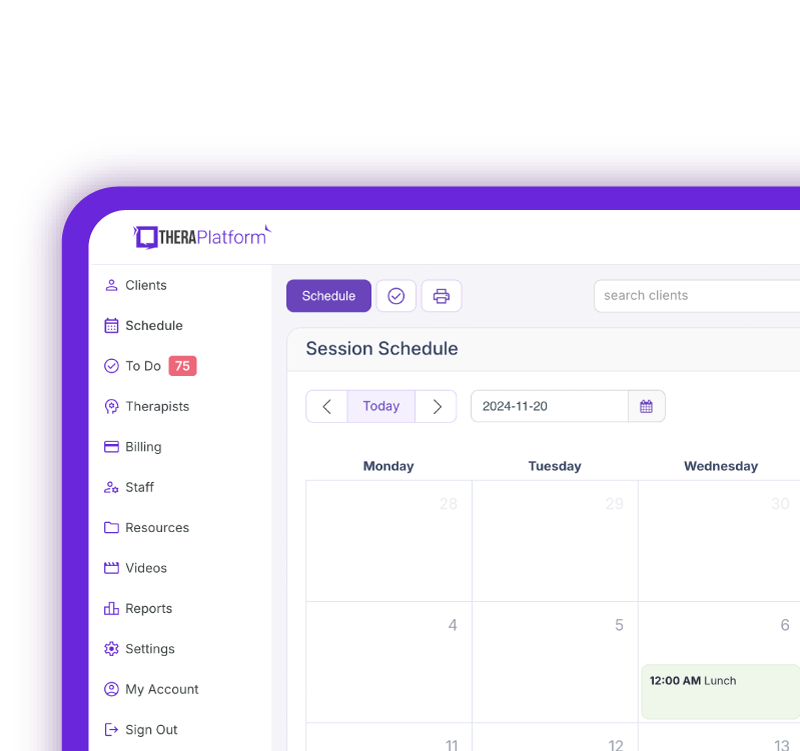
- TheraPlatform’s all-in-one EHR includes a client portal for secure messaging, homework sharing, and caregiver communication that helps OTs deliver collaborative, client-centered care.
Streamline your practice with One EHR
- Scheduling
- Flexible notes
- Template library
- Billing & payments
- Insurance claims
- Client portal
- Telehealth
- E-fax

Occupational therapy takes a holistic approach to identifying strategies that support older adults in continuing to engage in meaningful occupations.
Occupational therapists assess each individual's unique needs and develop personalized interventions to enhance function, safety, and overall engagement in daily life.
These interventions may include strategies to improve physical mobility, cognitive function, and emotional resilience, enabling older adults to maintain their autonomy and continue living in their preferred environments.
By incorporating rehabilitative and preventative measures, geriatric occupational therapists help older adults adapt to age-related changes while fostering a sense of purpose and fulfillment in their daily routines.
This comprehensive approach empowers older adults to navigate aging with confidence, which improves not only their physical capabilities but also their emotional and social connections.
Practice Management + EHR + Telehealth
Manage more in less time in your practice with TheraPlatform
Common conditions addressed
Aging is an inherent and natural aspect of life that involves physical, cognitive, and emotional challenges that impact daily life. Geriatric adults often experience various health concerns and conditions that hinder their ability to perform daily living tasks.
Some of these conditions impact physical health, including but not limited to arthritis, osteoporosis, Parkinson's disease, and post-stroke conditions. It also includes cognitive conditions such as dementia, Alzheimer's disease, or mild cognitive decline.
Furthermore, occupational therapists will assist geriatric patients experiencing depression, anxiety, and social isolation.
Geriatric occupational therapists work with their patients and develop individualized care plans that address their specific challenges, incorporating therapeutic exercises, adaptive strategies, and emotional support.
The goal is to enable older adults to function independently and improve their overall quality of life.
By proactively managing these conditions, occupational therapists help geriatric patients maintain their dignity, social connections, and ability to engage in meaningful and purposeful activities.
Overall, geriatric occupational therapists work to manage these conditions and improve their patients' overall health and well-being.
Watch this video to learn how to save time on therapy notes
Key areas of focus in geriatric occupational therapy
Occupational therapists use individualized approaches to address specific aspects of an older adult's daily life. This may include activities of daily living such as bathing, dressing, eating, and toileting, as well as instrumental activities of daily living (IADLs) such as cooking, medication management, or financial management.
Occupational therapists also assist with home safety and home modifications. Therapists will assess and adapt home environments to reduce fall risk by installing grab bars, adjusting lighting, or removing or securing rugs and getting rid of clutter.
Making environmental safety adaptations in the home can reduce the number of falls with 26% in people aged 60 and older.
Therapists also conduct cognitive interventions, such as memory aids and problem-solving exercises, to improve cognitive function, while community engagement activities encourage participation in social and leisure events to prevent isolation.
Free Resources for Therapists
Click below and help yourself to peer-created resources:

Treatment approaches
Occupational therapists working with the geriatric population utilize various evidence-based treatment strategies to meet individual needs. Therapists utilize therapeutic exercises focusing on strengthening and range of motion (ROM) exercises to improve overall mobility, strength, and function and reduce pain and fall risk.
Therapists will also utilize assistive devices and technology such as reachers, walkers, and adaptive utensils to promote increased independence.
Furthermore, therapists will also teach compensatory strategies, such as alternative methods to complete tasks when physical or cognitive abilities are limited.
For example, a geriatric therapist may instruct a patient on how to dress the affected upper extremity first after shoulder surgery or "show you how to get in and out of the shower safely."
Additionally, providing proper caregiver education ensures that family and professional caregivers receive adequate training to provide safe and effective support.
Benefits of geriatric occupational therapy
Occupational therapy goes beyond simply physical improvements and social or emotional well-being. Geriatric occupational therapists empower older adults by helping them perform daily activities safely and efficiently, ultimately reducing caregiver burden.
Through client-centered interventions, occupational therapists minimize fall risks and prevent injuries, fostering a safer living environment.
Additionally, occupational therapy boosts quality of life by promoting confidence, social engagement, and overall well-being. This increased independence allows older adults to remain active and engaged in their homes and communities.
Occupational therapists help the geriatric population maintain their dignity and autonomy by addressing physical and cognitive challenges. Their support benefits the individual and provides families with peace of mind, knowing their loved ones can navigate daily life with greater ease.
Collaboration in geriatric care
Occupational therapy is the most effective integrated aspect of a comprehensive care plan. Occupational therapists collaborate with interdisciplinary team members, including doctors, physical therapists, speech therapists, and caregivers, for holistic care.
Therapy plans are designed to be client-centered and focused on the individual's preferences, abilities, and goals, creating meaningful and achievable outcomes.
Geriatric occupational therapy plays a vital role in supporting older adults in navigating the challenges of aging with dignity and independence. As the global population ages, the demand for these services will only grow, emphasizing the importance of occupational therapy in supporting aging-in-place initiatives and focusing on the overall quality of life for the geriatric population.
Occupational therapists empower older adults to lead fulfilling and independent lives by addressing physical, cognitive, and emotional needs.
Documenting geriatric occupational therapy
An essential component of Geriatric Occupational Therapy (and indeed nearly all therapeutic work) is accurate, timely documentation. One common structure is the SOAP format:
- S (Subjective): What the clients report — emotional state, concerns, events since last session.
- O (Objective): What the therapist observes — interaction patterns, tone, nonverbal cues.
- A (Assessment): Therapist’s clinical interpretation — what the subjective and objective data suggest in terms of attachment needs, emotional blocks, and relational dynamics.
- P (Plan): What will be done going forward — interventions, new homework, focus for next session.
Example SOAP note for geriatric occupational therapy
S — Subjective
- Pt reports, “Putting on my socks is the worst part.” Pain 4/10 R hip at start, 3/10 end (numeric pain scale).
- Endorses fear of falling in bathroom; slept poorly last night.
- Spouse present; reports difficulty with pill organizer and LB dressing. No new falls/near-falls this week.
O — Objective
- Vitals: Seated BP 128/76 mmHg, HR 72 bpm, SpO₂ 98% RA pre-activity; WNL post.
- Cognition/Orientation: A&O ×4; follows 2–3 step commands with min verbal cues for sequencing during novel tasks.
- UE Function: Shoulder MMT 4-/5 bilaterally; grip (Jamar) R 18 kg / L 16 kg.
- Fine Motor/Coordination: 9-Hole Peg Test R 26.4 s / L 28.1 s (mildly slowed).
- ADL Performance (today):
- LB dressing (socks/shoes): Min A with long-handled sock aid and shoehorn; requires hip precaution cues ×3 (no hip flex >90°).
- Toileting transfer: CGA with FWW to raised toilet + safety frame; verbal cues for hand placement.
- Grooming: Standing at sink 5 min with SBA; one seated rest break for energy conservation.
- Medication mgmt simulation: Filled 7-day pillbox with 1 error corrected with cueing (label reading, contrast background).
- Interventions (therapeutic activity & self-care training):
- AE training: sock aid/reacher/long-handled shoehorn—demonstration → guided practice (blocked then random practice).
- Transfer training: sit↔stand and toilet transfer with FWW; emphasis on hip precautions and safe sequencing.
- Energy conservation: pacing, task simplification, rest breaks during grooming.
- Home safety education: bathroom layout (non-slip mat, remove loose rugs), night lighting; spouse trained in stand-by guarding.
- Fine-motor/visual strategy: pillbox setup using high-contrast tray; teach-back method.
A — Assessment
- Pt demonstrates measurable progress in LB dressing (from Mod A last visit → Min A today) using AE with fewer verbal cues; however, carryover of hip precautions during dynamic dressing remains inconsistent.
- Functional transfers improving (now CGA vs Min A last session) with better hand placement, but fear of falling limits fluidity and standing tolerance.
- Fine-motor speed mildly reduced; impacts medication setup accuracy (1 error today, improved from 3 errors at eval).
- Rehab potential: Good—motivated, supportive spouse, home is single-level.
- Medical necessity: Skilled OT required to advance AE use, strengthen safety behaviors, and integrate hip precautions + fall prevention into ADLs/IADLs to reduce injury risk and support safe home return.
P — Plan
- Frequency/Duration: 2×/week × 4 weeks.
- Next Session: Progress toilet and tub/shower transfer training with tub bench; introduce grab bar placement options (education); advance LB dressing to SBA with faded cues; continue pillbox training with dual-task (light conversation) for carryover.
How EHRs can help with documentation
Modern EHR/practice management platforms (such as TheraPlatform) assist greatly with documentation by providing HIPAA‑compliant, integrated systems for note entry, storage, scheduling, and billing. They allow therapists to:
- Use and customize templates (e.g., SOAP, DAP, and others) or build their own to streamline note writing and ensure consistency.
- Link notes to treatment plans, goals, and session history so client progress is easily tracked over time.
- Utilize e-fax and secure document sharing via client portal to safely exchange information with clients or other providers while maintaining confidentiality.
- Leverage dictation and telehealth transcription, which can automatically convert sessions into therapy or assessment notes, saving time and reducing manual entry.
- Take advantage of AI features that streamline documentation by automatically populating intake form data into assessment templates and generating complete therapy and assessment notes from the information you provide, all with a single click.
Watch this video to learn how to save time on therapy notes
Meanwhile, AI‑assisted note tools are emerging which can further help clinicians by:
- Automatically transcribing session audio (if permitted) and highlighting key moments (e.g. emotional shifts, major themes).
- Suggesting draft notes or filling in objective or assessment sections based on observed data, freeing up clinicians’ time.
- Supporting consistency and reducing missing components in notes, which helps from both clinical, legal, and insurance perspectives.
Together, structured SOAP‑type notes, good EHR platforms, and smart AI tools support better therapeutic outcomes, more efficient workflows, and stronger accountability.
Streamline your practice with One EHR
- Scheduling
- Flexible notes
- Template library
- Billing & payments
- Insurance claims
- Client portal
- Telehealth
- E-fax
Resources
All
TheraPlatform is an all-in-one EHR, practice management, and teletherapy software built for therapists to help them save time on admin tasks. It offers a 30-day risk-free trial with no credit card required and supports mental and behavioral health, SLPs, OTs, and PTs in group and solo practices.
More resources
- Therapy resources and worksheets
- Therapy private practice courses
- Ultimate teletherapy ebook
- The Ultimate Insurance Billing Guide for Therapists
- The Ultimate Guide to Starting a Private Therapy Practice
- Mental health credentialing
- Insurance billing 101
- Practice management tools
- Behavioral Health tools
Free video classes
- Free on-demand insurance billing for therapist course
- Free mini video lessons to enhance your private practice
- 9 Admin tasks to automate in your private practice
References
- De Coninck, L., Declercq, A., Bouckaert, L., Döpp, C., Graff, M. J. L., & Aertgeerts, B. (2024). Promoting meaningful activities by occupational therapy in elderly care in Belgium: The promote intervention. BMC Geriatrics, 24(1). https://doi.org/10.1186/s12877-024-04797-6
- Finding innovative approaches to support productive aging. Aota.org. https://www.aota.org/practice/clinical-topics/driving-community-mobility/productive-aging
- Occupational therapy for older adults. Occupational Therapy for Older Adults | University Hospitals. https://www.uhhospitals.org/health-information/health-and-wellness-library/article/adult-diseases-and-conditions-v1/occupational-therapy-for-older-adults
FAQs for geriatric occupational therapy
What’s the difference between OT and PT for older adults?
OT focuses on daily activities (ADLs/IADLs), cognitive supports, and adapting environments/habits; PT focuses more on movement, strength, and balance. They often work together.
How does OT reduce fall risk at home?
By assessing hazards and recommending changes (grab bars, lighting, clutter/rug removal), training on safe techniques and devices, and reinforcing balance and energy-conservation strategies with caregiver support.
Where does geriatric OT happen and can it be virtual?
OT can occur in clinics, hospitals, rehab, home, community settings, and via HIPAA-compliant telehealth when appropriate. The setting depends on goals, safety, and payer rules.