Insomnia ICD 10 codes

Insomnia ICD 10 codes describe a sleep pattern that is so impaired, they are considered a medical disorder. But many people—therapists included—don’t always consider sleep an important factor in their mental health. Sleep and mental health are inexorably linked. It is almost impossible to be emotionally fit without proper amounts of sleep. As a result, the quality of someone’s slumber often goes unaddressed when a client comes to therapy.
Summary
- Insomnia is closely linked to mental health, with poor sleep contributing to mood dysregulation, reduced cognitive performance, and exacerbation of psychiatric disorders such as depression, anxiety, and PTSD.
- Accurate diagnosis using tools like clinical interviews, sleep diaries, actigraphy, and validated screening measures is essential for identifying insomnia and selecting the appropriate ICD-10 or ICD-11 code for documentation and billing. Enrolling in an insurance billing course for therapists can help providers enhance their knowledge.
- Non-medication treatments such as CBT-I, positive sleep hygiene, relaxation techniques, and stimulus control can significantly improve sleep quality and overall well-being.
- Correct use of Insomnia ICD-10 codes ensures proper insurance reimbursement and highlights the importance of integrating sleep assessment and treatment into a client’s overall care plan. By leveraging an EHR like TheraPlatform for efficient documentation and claim submission, therapists can tackle billing with ease.
→ Click here to enroll in our free on-demand Insurance Billing for Therapists video course [Enroll Now]
Regrettably, that is a huge mistake. Here is why sleep needs to be part of your client’s treatment plan.
How sleep impacts mental health
While it is well established that many psychiatric problems affect sleep, it is now becoming accepted that sleep quality can directly impact our mental health. The following are prominent areas affected by sleep difficulties:
Mood regulation
We have all woken up after a night of tossing and turning and found ourselves in a grouchy mental state. However, research is now catching up with what we have thought: It is harder to cope with stress and regulate mood when tired. As such, a lack of sleep may be responsible for our irritability with a co-worker as well as being quick to anger with a loved one.
Streamline your insurance billing with One EHR
- Claim batching
- Auto claims
- Automated EOB & ERA
- Real-time claim validation
- Real-time claim tracking
- Aging and other reports

Psychiatric disorders
While it is a stretch to blame sleep for the cause of certain psychological disorders, sleep difficulties do contribute to their development and exacerbate the symptoms.
- Insomnia has been linked to both depression and anxiety.
- People who have sleep problems are more likely to develop PTSD in the future.
- Sleep disturbance often precedes the onset of schizophrenia and increases the severity of psychotic symptoms.
Productivity
Have you ever felt too tired to work or meet your daily responsibilities? You aren’t alone. Sleep is connected to our productivity at work, school, and home. Insomnia has been associated with decreased productivity, performance, and safety. And let’s face it, we feel better when we get things done and perform at a high level.
Cognitive abilities
A lack of sleep appears to have a direct negative impact on the brain’s cognitive processes. Memory, attention, problem-solving, creativity, and judgment are adversely affected by sleep difficulties. This can lead to numerous negative consequences, such as an increase in accidents, making more mistakes, and an escalation of risky decisions.
Physical consequences that affect mental outlook
A lack of sleep has many associated physical effects, including an increased chance of illness, high blood pressure, low sex drive, and weight gain, none of which help improve one’s mood or self-image. It is hard to be optimistic about your life when physical ailments are burdening you and your lifestyle.
Assessment
Therapists use the following types of evaluation to diagnose insomnia:
Clinical interview
The clinical interview is the most straightforward way to obtain information about sleep behavior. Structured interviews, such as the Structured Clinical Interview for DSM-5 (SCID-5), have questions specifically designed to diagnose sleep disorders. For less formal interviews, such as those that occur during intake, it is recommended that therapists ask questions that will elicit the necessary information about sleep habits to help diagnose insomnia.
Sleep diary
A sleep diary is a daily record kept by the client that illustrates their sleep habits.
Usually, it is completed for at least two straight weeks and may include:
- Bedtime and wake-up times
- Sleep duration
- Sleep quality
- Naps taken, if any
- Caffeine and alcohol Intake
Actigraphy/SmartWatch
As an adjunct to a sleep diary, a client may also be asked to wear technology that keeps an objective record of their sleep patterns. An actigraph is an accelerometer that detects movement. It can be worn on different parts of the body to measure motion related to sleep. Many smartwatches have tools that serve this same function and can also track heart rate and other vital signs with decent accuracy.
Insomnia screening tools
Self-report assessment resources with robust psychometric properties have been developed to identify insomnia.
Two of the most popular are:
- The Insomnia Severity Index (ISI) is a seven-item index created as a brief screening tool for insomnia.
- The Pittsburgh Insomnia Rating Scale has two editions to rate insomnia, either a 20 or 65-item scale, depending on how much time you may have for assessment.
Watch this video to see how TheraPlatform’s EHR saves time on insurance billing
Insomnia ICD 10 codes and ICD 11 codes
The International Classification of Diseases, 10th Revision contains the following Insomnia ICD 10 codes. (The International Classification of Diseases, 11th Revision (ICD-11) contains the following major categories of sleep disorders)
Condition | Description | Insomnia ICD 10 codes | Insomnia ICD 11 codes |
|---|---|---|---|
Insomnia | Insomnia is the inability to fall asleep or stay asleep. Difficulty falling asleep happens to everyone at times, but clinical insomnia is a long-term problem that can lead to sleep deprivation. | G47.0 | 7A0Z |
Hypersomnolence | Hypersomnolence, on the other hand, is when someone has difficulty staying awake and alert during the day. This may cause them to sleep excessively and feel drowsy even when they have slept sufficiently. | G47.1 | 7A2Z |
Circadian Rhythm Sleep Disorders | This type of sleep disorder is due to disruptions in the body’s natural sleep-wake cycle. Some problems in this category are temporary and easily correctable, like jet lag. Others, such as Irregular sleep-wake rhythm disorder—where sleep and wake times are unpredictable—indicate a more severe problem. | G47.2 | 7A6Z |
Sleep Apnea | Sleep apnea is characterized by difficulty breathing during sleep. This can result in snoring, headaches, and fatigue. This can cause serious consequences over time and is often treated using a continuous positive airway pressure (CPAP) machine. | G47.3 | 7A41 |
Narcolepsy | Narcolepsy is a neurological disorder that prevents the brain from effectively controlling sleep-wake cycles. As a result, you may fall asleep unexpectedly during the day. Needless to say, this presents difficulties in productivity and may lead to dangerous situations (e.g., car accidents). | G47.4 | 7A20 |
Parasomnia | Parasomnias are unusual behaviors that disrupt sleep. For example, sleepwalking, night terrors, and paralysis. Although they are frequently harmless, they can be dangerous and disrupt the quality of sleep. | G47.5 | 7B0Z |
Sleep-Related Movement Disorders | These disorders cause movements during sleep that can disrupt sleep quality and cause fatigue for individuals and their sleep partners. Think restless leg syndrome and teeth grinding. | G47.6 | 7A8Z |
Ensuring accurate documentation for Insomnia ICD 10 codes is essential for proper billing and reimbursement.
Some pitfalls to avoid with Insomnia ICD 10 code documentation include:
- Clerical errors such as typos
- Missing information
- Utilizing incorrect codes
- Incorrect billing information
Practice Management + EHR + Telehealth
Manage more in less time in your practice with TheraPlatform
Insomnia treatment
The following are non-medication therapeutic interventions for insomnia:
Positive sleep hygiene
Good sleep habits can make a significant difference in sleep quality.
Follow these practices to ensure a peaceful slumber:
- Avoid screens (e.g., cell phones, TV, computers) at least an hour before bedtime.
- Do not exercise near bedtime.
- Avoid sleep-inhibiting substances, such as alcohol, nicotine, and caffeine close to bedtime.
- Ensure that your bedding (i.e., mattress, pillows, blankets) promotes restful sleep.
- Block out extraneous light and sound.
Stimulus control
Stimulus control is an associative technique that teaches individuals that certain places and times are appropriate for sleep. Here are several recommended behaviors you can share with clients:
- Keep a consistent sleep schedule (even on weekends).
- Avoid excessive napping, Naps should be no more than a half hour.
- Get out of bed and do something quiet if you find yourself awake for 20 minutes.
- The bed is to be used only for sleeping and sex.
Meditation and relaxation techniques
The following techniques are effective in promoting restful sleep:
- Mindfulness meditation helps people focus on the present internal and external environment. This is especially helpful for clients whose anxiety over life’s problems impedes their sleep.
- Deep breathing relaxes the body and relieves stress, helping one to fall asleep faster.
- Progressive muscle relaxation is a technique where specific muscle groups are tensed and released all over the body, helping the person to be mindful, relax, and prepare for sleep.
Cognitive Behavioral Therapy for Insomnia (CBT-I)
Cognitive behavioral therapy for insomnia (CBT-I) uses the cognitive components of CBT as a foundation and adds behavioral sleep interventions, such as stimulus control, relaxation, and sleep education. People with insomnia frequently have distorted thoughts regarding sleep that cause disruption. CBT-I attempts to replace these faulty cognitions with more adaptive thinking. For example, a person with insomnia may believe that they won’t be able to function if they don’t get eight hours of sleep each night. The therapist will help the client challenge those beliefs and replace them with more realistic thinking.
Although insomnia is not usually the main reason that someone seeks therapy, it is frequently a contributing or related factor. Sleep disturbance affects millions of people each year and can cause impairment in all aspects of life. It is imperative that therapists pay attention to insomnia when assessing their client’s functioning and formulating treatment plans. Sleep is one of the pillars of physical and mental health. Therapists need to treat it with the attention it deserves.
Light therapy
Light boxes are used primarily for problems with circadian rhythm sleep disorders and Seasonal Affective Disorder (SAD). They provide simulated daylight during the day for those people who may not be getting enough, as commonly happens during the winter. Additionally, they can be used to shift wake-sleep cycles to more accommodating times.
Medication
- Selective gamma-aminobutyric acid (GABA) agonists, such as Ambien and Lunesta, are often prescribed for sleep difficulties. However, they can have serious side effects (e.g. sleepwalking, memory problems) and become habit-forming. As a result, they are not frequently prescribed long-term.
- Ramelteon is a promising new sleep medication with fewer side effects and addictive properties. It works by regulating a person’s circadian rhythm. Regrettably, as with all medication, it is not a long-term cure.
- Melatonin, an over-the-counter hormone supplement, is also frequently recommended as a more natural option for sleep issues, with mixed success.
Sleep has a tremendous impact on mental health. It affects our mood, judgment, and cognitive ability. Therapists need to strongly consider making sleep a part of the treatment plan for those clients who have significant sleep issues. Correct diagnosis and use of Insomnia ICD 10 and ICD 11 codes can help
Practice Management + EHR + Telehealth
Manage more in less time in your practice with TheraPlatform
How EHR and practice management software can save you time with insurance billing for therapists
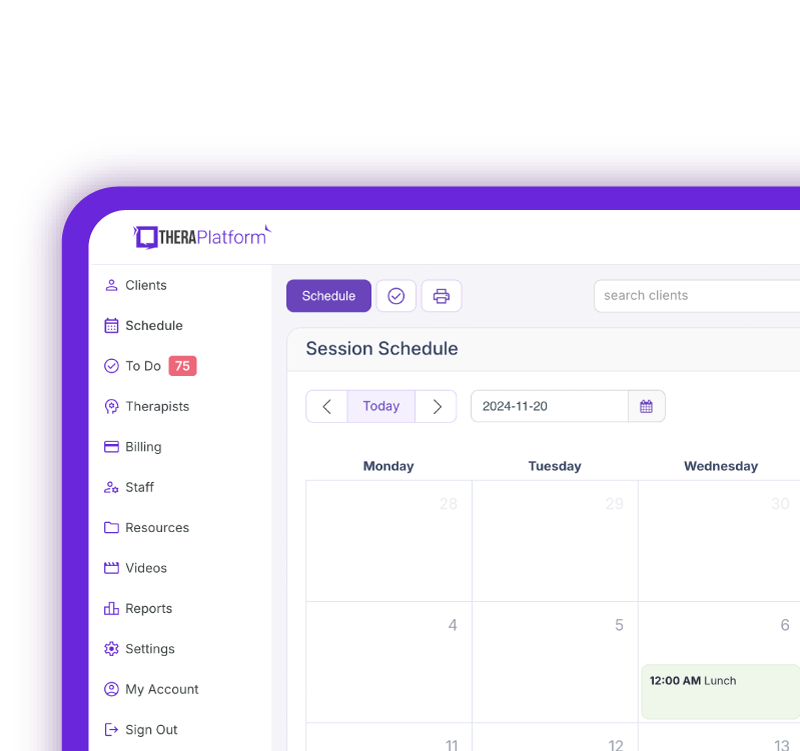
EHRs with integrated billing software and clearing houses, such as TheraPlatform, offer therapists significant advantages in creating an efficient insurance billing process. The key is minimizing the amount of time dedicated to developing, sending, and tracking medical claims through features such as automation and batching.
Watch this video to see how TheraPlatform’s EHR saves time on insurance billing
What are automation and batching?
- Automation refers to setting up software to perform tasks with limited human interaction.
- Batching or performing administrative tasks in blocks of time at once allows you to perform a task from a single entry point with less clicking.
Which billing and medical claim tasks can be automated and batched through billing software?
- Invoices: Create multiple invoices for multiple clients with a click or two of a button or set up auto-invoice creation, and the software will automatically create invoices for you at the preferred time. You can even have the system automatically send invoices to your clients.
- Credit card processing: Charge multiple clients with a click of a button or set up auto credit card billing, and the billing software will automatically charge the card (easier than swiping!)
- Email payment reminders: Never manually send another reminder email for payment again, or skip this altogether by enabling auto credit card charges.
- Automated claim creation and submission: Batch multiple claims with one button click or turn auto claim creation and submission on.
- Live claim validation: The system reviews each claim to catch any human errors before submission, saving you time and reducing rejected claims.
- Automated payment posting: Streamline posting procedures for paid medical claims with ERA. When insurance offers ERA, all their payments will post automatically on TheraPlatform's EHR.
- Tracking: Track payment and profits, including aging invoices, overdue invoices, transactions, billed services, service providers
Utilizing billing software integrated with an EHR and practice management software can make storing and sharing billing and insurance easy and save providers time when it comes to insurance billing for therapists.
Streamline your practice with One EHR
- Scheduling
- Flexible notes
- Template library
- Billing & payments
- Insurance claims
- Client portal
- Telehealth
- E-fax
Resources for mental health therapists
Theraplatform is an all-in-one EHR, practice management and teletherapy solution with AI-powered notes and Wiley Treatment Planners that allow you to focus more on patient care. With a 30-day free trial, you have the opportunity to experience Theraplatform for yourself with no credit card required. Cancel anytime. They also support different industries including mental and behavioral health therapists in group practices and solo practices.
More resources
- Therapy resources and worksheets
- Therapy private practice courses
- Ultimate teletherapy ebook
- The Ultimate Insurance Billing Guide for Therapists
- The Ultimate Guide to Starting a Private Therapy Practice
- Insurance billing 101
- Practice management tools
Free video classes
- Free on-demand insurance billing for therapist course
- Free mini video lessons to enhance your private practice
- 9 Admin tasks to automate in your private practice
References
Freeman, D., Sheaves, B., Waite, F., Harvey, A. G., & Harrison, P. J. (2020). Sleep disturbance and psychiatric disorders. The lancet. Psychiatry, 7(7), 628–637. https://doi.org/10.1016/S2215-0366(20)30136-X
Gunther, A. (2023, April 25). Yale New Haven Health. Does lack of sleep cause weight gain? https://www.ynhhs.org/articles/does-lack-of-sleep-cause-weight-gain#:~:text=That%20same%20study%20shows%20those,by%20stress%20can%20increase%20appetite
Kaskie, R. E., Graziano, B., & Ferrarelli, F. (2017). Schizophrenia and sleep disorders: links, risks, and management challenges. Nature and science of sleep, 9, 227–239. https://doi.org/10.2147/NSS.S121076
National Center for Complementary and Integrative Health. Melatonin: what you need to know. https://www.nccih.nih.gov/health/melatonin-what-you-need-to-know#:~:text=Overall%2C%20the%20studies%20showed%20that,ways%20to%20measure%20these%20outcomes
Pelham, V. (2022, June 15). Cedars-Sinai Blog. The six types of sleep disorders. https://www.cedars-sinai.org/blog/understanding-treating-sleep-disturbances.html
Rosekind, M. R., Gregory, K. B., Mallis, M. M., Brandt, S. L., Seal, B., & Lerner, D. (2010). The cost of poor sleep: workplace productivity loss and associated costs. Journal of occupational and environmental medicine, 52(1), 91–98. https://doi.org/10.1097/JOM.0b013e3181c78c30
Suni, E. (2023, July 18). Sleep Foundation. How lack of sleep impacts cognitive performance and focus. https://www.sleepfoundation.org/sleep-deprivation/lack-of-sleep-and-cognitive-impairment
Taylor, D. J., Lichstein, K. L., Durrence, H. H., Reidel, B. W., & Bush, A. J. (2005). Epidemiology of insomnia, depression, and anxiety. Sleep, 28(11), 1457–1464. https://doi.org/10.1093/sleep/28.11.1457
Vandekerckhove, M., & Wang, Y. L. (2017). Emotion, emotion regulation and sleep: An intimate relationship. AIMS neuroscience, 5(1), 1–17. https://doi.org/10.3934/Neuroscience.2018.1.1
Walker, J., Muench, A., Perlis, M. L., & Vargas, I. (2022). Cognitive Behavioral Therapy for Insomnia (CBT-I): A Primer. Clinical psychology and special education, 11(2), 123–137. https://doi.org/10.17759/cpse.2022110208
Watson, S. (2024, August 23). Healthline. The effects of sleep deprivation on your body. https://www.healthline.com/health/sleep-deprivation/effects-on-body
FAQs about Insomnia ICD 10 codes
What is the ICD-10 code for primary insomnia?
The primary ICD-10 code for insomnia that isn’t caused by another condition is F51.01 – Primary insomnia. This code applies when difficulty falling or staying asleep persists for at least one month and isn’t linked to another medical, mental health, or substance-related disorder.
Which ICD-10 code should I use when insomnia is related to another condition?
If insomnia is due to a mental health or medical disorder, use a more specific code such as:
- F51.05 – Insomnia due to other mental disorder
- G47.00 – Insomnia, unspecified
- G47.09 – Other insomnia
Why is it important to select the right ICD-10 code for insomnia?
Accurate coding helps ensure proper insurance reimbursement, supports medical necessity, and strengthens clinical documentation. Using the correct insomnia code also aids in treatment planning and outcome tracking within your EHR or therapy software.