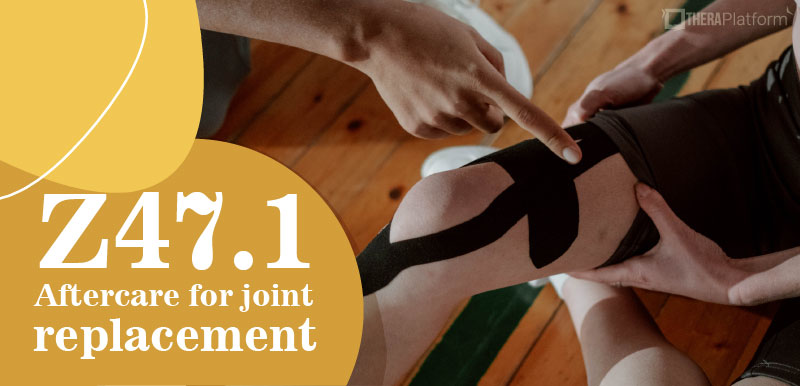
Total knee replacement surgery ICD 10 codes

Total knee replacement surgery ICD 10 codes are used to bill a popular procedure to address pain and disability associated with knee osteoarthritis, rheumatoid, and post-traumatic arthritis. While not a first-line treatment for knee pain, many individuals undergo a total knee arthroplasty (TKA) each year.
Summary
- Total knee replacement (TKA) is common and growing. Over 288,000 TKA procedures were reported in 2024 alone, with strong patient-reported improvements in pain and function.
- Physical therapy plays a key role in recovery. Post-TKA rehab focuses on restoring range of motion, strength, gait, and functional mobility to maximize outcomes.
- Accurate ICD-10 coding is essential for reimbursement. Correct diagnosis selection (e.g., aftercare vs. prosthesis status vs. complication codes) supports medical necessity and insurance payment. Enrolling in an insurance billing course for therapists can help providers enhance their knowledge.
- Know the difference between status and aftercare codes. Codes like Z96.651–Z96.653 reflect the presence of an artificial joint, while Z47.1 is commonly used for immediate aftercare following joint replacement surgery. By leveraging an EHR like TheraPlatform for efficient documentation and claim submission, therapists can tackle billing with ease.
→ Enroll in My Free, On-Demand Insurance Billing for Therapists Course
The American Joint Replacement Registry (AJRR) has been tracking joint replacement statistics since 2012. Between 2012 and 2024, they captured 4.6-plus million hip and knee procedures, including primary and revision arthroplasty procedures from reporting institutions.
In their 2025 annual report, TKA accounts for the majority of cases and the highest surgeon volume they tracked. The following statistics highlight the state of TKAs in 2024
Factor | Number |
|---|---|
Total knee replacement procedures | 288,185 |
Number of surgeons performing TKAs | 3,895 |
Number of surgeons performing revision | 2,844 |
Mean number of revisions per surgeon | 10.7 |
Mean age of TKA recipients | 68.8 years old |
Mean age of revision TKA recipients | 67 years old |
Average Length of Stay (LOS) for primary TKA | 1.0 days |
Average LOS for TKA revision | 3.4 days |
Patient-reported outcome measures were also tracked between 2012 and 2024. For the KOOS, JR., (Knee Disability and Osteoarthritis Outcome Score), 77%-87% of reported cases met the MCID for improvement.
Other outcome measures, such as the VR-12 (The Veterans RAND 12 Item Health Survey), reported that 32.7% of respondents experienced a meaningful improvement in mental health and 72.9% in physical health.
Streamline your insurance billing with One EHR
- Claim batching
- Auto claims
- Automated EOB & ERA
- Real-time claim validation
- Real-time claim tracking
- Aging and other reports

According to the American Academy of Orthopedic Surgeons, indications for total knee replacement include the following:
- Severe knee pain or stiffness that limits daily activities; may necessitate the use of an assistive device like a cane or walker for walking
- Moderate to severe knee pain that persists at rest
- Chronic knee inflammation or swelling that is unresponsive to medications or rest
- Deformity of the knee such as genu varus
- Failure to achieve significant resolution of symptoms with conservative treatment
Physical therapy is commonly recommended following TKA to help restore range of motion, address impairments such as muscle weakness and pain, and to restore functional mobility and gait.
With more than 300k individuals undergoing total knee replacement in a single year, you'll likely encounter at least one patient post-TKA in your clinic.
In addition to educating yourself on the latest evidence-based treatment approaches for TKA recovery, understanding how to bill effectively for this care is an essential part of physical therapy practice.
Correct orthopedic coding for TKA is essential for billing, insurance payments, prior authorizations, and data tracking. In the remainder of this article, we will review some considerations for using ICD-10 codes after a total knee replacement.
Practice Management + EHR + Telehealth
Manage more in less time in your practice with TheraPlatform
Introduction to ICD-10 codes
While you may be experienced at selecting ICD-10 codes, have you ever wondered exactly what they mean? Let’s quickly review the purpose and function of ICD codes.
Who: All HIPAA-covered entities are required to submit ICD-10 codes if seeking reimbursement for services from an insurance company. This includes physical therapists.
What: The International Classification of Disease, 10th Revision (ICD-10) is a set of diagnosis, symptom, and procedure codes that physical therapists use daily in their practice. ICD-10 codes are alphanumeric codes. They begin with a letter and are always between three and seven characters with a decimal point placed after the third character. The more characters it has, the more specific it is. Each code follows the following structure:
- Characters 1-3 indicate the category of the diagnosis
- Characters 4-6 indicate etiology, anatomic site, severity or other clinical detail
- Character 7 is an extension value, for example:
- A: initial encounter (anything related to care of the initial injury)
- D: subsequent encounter (anything related to the phase of routine care of the injury while the patient recovers–this usually refers to rehabilitation)
- S: sequela (other conditions that may result from the presence of the primary condition)
Note, for fracture care, there are several more extensions (example: P, G, K, which signify malunion, delayed healing, or nonunion for a subsequent encounter)
You will submit a primary diagnosis code (the primary reason you are treating the patient) and any other relevant diagnosis codes.
When: ICD-10 codes must be submitted with relevant documentation whenever reimbursement is sought for covered services, either by the healthcare entity itself or by a patient.
Why: While it may seem like an extra step in an already detailed process of documentation and billing, ICD-10 codes are required for a specific reason. Not only do they identify a medical diagnosis, but perhaps more importantly, they help insurance companies understand why the care you are providing is medically necessary and therefore, reimbursable.
Free Resources for Therapists
Click below and help yourself to peer-created resources:

Total knee replacement ICD 10 codes
Three total knee replacement ICD 10 codes are typically used:
- Z96.651 – Presence of right artificial knee joint
- Z96.652 – Presence of left artificial knee joint
- Z96.653 – Presence of artificial knee joint, bilateral
Each of these total knee replacement ICD 10 codes indicates the patient has a knee prosthesis in place. These codes are most commonly used when a patient is undergoing physical therapy related to pain or dysfunction post-TKA beyond the normal course of care.
When aftercare is provided immediately after TKA, the most commonly billed total knee replacement icd 10 code is:
Z47.1: aftercare following joint replacement surgery
Other codes to consider include those that indicate you are treating the patient in response to complications of the prosthesis, those that identify pertinent impairments or complaints, and those that indicate other comorbid conditions that influence their course of care, such as those that slow wound healing.
→ Download My Free Knee Strengthening Exercises for Osteoarthritis
Below are some examples:
- T84.03xA: Mechanical complication of internal joint prosthesis (for complications)
- M25.561/M25.562: Pain in right/left knee
- R26.89: Painful gait
- E10.59: Type I Diabetes Mellitus with other circulatory complications
- Z87.891: Personal history of nicotine dependence
When applicable, don’t forget to choose the total knee replacement ICD 10 code that specifies laterality of the condition and check specific payer requirements to determine if modifiers or code bundles are necessary.
Accurate total knee replacement ICD 10 codes ensure compliance, reimbursement, and continuity of care.
The Centers for Medicare and Medicaid Services publish an updated list of codes each year on October 1, and are in effect until September 30 of the following year.
Sites like ICD10 Data can identify code changes once they update their list, as announced on their homepage.
Practice Management + EHR + Telehealth
Manage more in less time in your practice with TheraPlatform
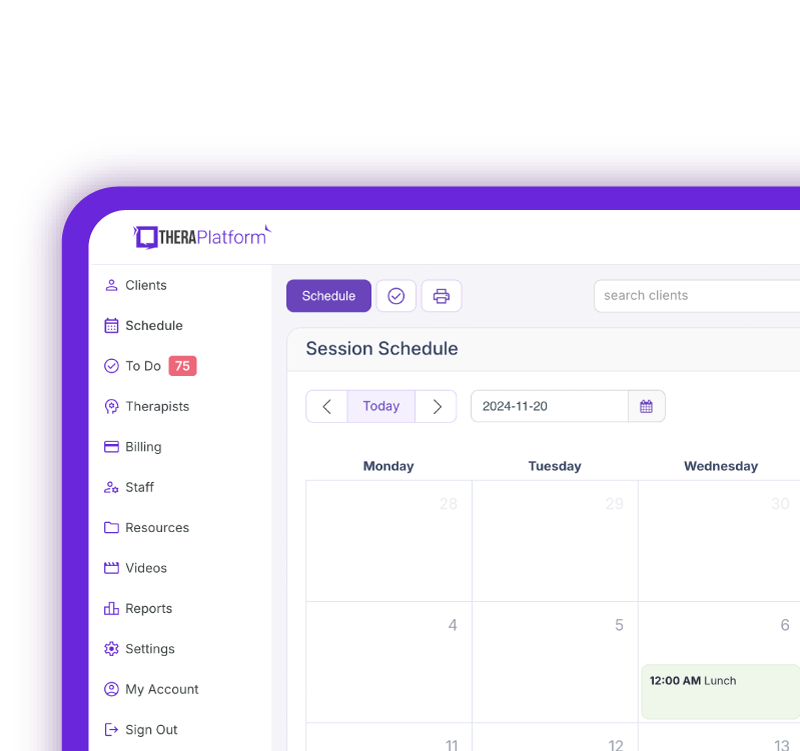
How EHR and practice management software can save you time with insurance billing for therapists
EHRs with integrated billing software and clearing houses, such as TheraPlatform, offer therapists significant advantages in creating an efficient insurance billing process. The key is minimizing the amount of time dedicated to developing, sending, and tracking medical claims through features such as automation and batching.
Watch this video to see how TheraPlatform’s EHR saves time on insurance billing
What are automation and batching?
- Automation refers to setting up software to perform tasks with limited human interaction.
- Batching or performing administrative tasks in blocks of time at once allows you to perform a task from a single entry point with less clicking.
Which billing and medical claim tasks can be automated and batched through billing software?
- Invoices: Create multiple invoices for multiple clients with a click or two of a button or set up auto-invoice creation, and the software will automatically create invoices for you at the preferred time. You can even have the system automatically send invoices to your clients.
- Credit card processing: Charge multiple clients with a click of a button or set up auto credit card billing, and the billing software will automatically charge the card (easier than swiping!)
- Email payment reminders: Never manually send another reminder email for payment again, or skip this altogether by enabling auto credit card charges.
- Automated claim creation and submission: Batch multiple claims with one button click or turn auto claim creation and submission on.
- Live claim validation: The system reviews each claim to catch any human errors before submission, saving you time and reducing rejected claims.
- Automated payment posting: Streamline posting procedures for paid medical claims with ERA. When insurance offers ERA, all their payments will post automatically on TheraPlatform's EHR.
- Tracking: Track payment and profits, including aging invoices, overdue invoices, transactions, billed services, service providers
Utilizing billing software integrated with an EHR and practice management software can make storing and sharing billing and insurance easy and save providers time when it comes to insurance billing for therapists.
Streamline your practice with One EHR
- Scheduling
- Flexible notes
- Template library
- Billing & payments
- Insurance claims
- Client portal
- Telehealth
- E-fax
Resources for physical therapists
TheraPlatform is an all-in-one EHR, practice management, and teletherapy software with AI-powered notes built for therapists to help them save time on admin tasks. It offers a 30-day risk-free trial with no credit card required and supports different industries and sizes of practices, including physical therapists in group and solo practices.
More resources
- Therapy resources and worksheets
- Therapy private practice courses
- Ultimate teletherapy ebook
- The Ultimate Insurance Billing Guide for Therapists
- The Ultimate Guide to Starting a Private Therapy Practice
- Insurance billing 101
- Practice management tools
Free video classes
- Free on-demand insurance billing for therapist course
- Free mini video lessons to enhance your private practice
- 9 Admin tasks to automate in your private practice
FAQs about total knee replacement ICD 10 codes
What ICD-10 code is used after a total knee replacement?
Z47.1 (aftercare following joint replacement surgery) is commonly used immediately post-surgery, while Z96.651–Z96.653 indicate the presence of an artificial knee joint during later episodes of care.
Why is accurate ICD-10 coding important after TKA?
Proper coding ensures compliance, demonstrates medical necessity, supports insurance reimbursement, and helps track outcomes and data.
What other ICD-10 codes may be used in post-TKA physical therapy?
Therapists may also use codes for pain (M25.561/M25.562), gait abnormalities (R26.89), mechanical complications (T84.03xA), or comorbidities that affect recovery.