
Physical therapy billing metrics

Physical therapy billing metrics could be a game-changer in a clinic's ability to remain operational. Steady cash flow and timely payments can be interrupted by errors and oversights at multiple spots along the workflow, from initial patient contact to claim submissions and invoice dispersal.
Summary
- Tracking physical therapy billing metrics is essential for cash flow and compliance, especially as reimbursements tighten and regulations increase.
- Denials and payment delays often stem from repeatable issues—such as authorization gaps, coding errors, or modifier misuse—that metrics help quickly identify. Enrolling in an insurance billing course for therapists can help providers enhance their knowledge.
- Monitoring payer-specific and visit-level data reveals where revenue is leaking, allowing clinics to make targeted workflow improvements.
- Using an EHR with integrated billing, clearinghouse tools, and AI support can significantly reduce errors, speed up payments, and ease staff workload.
→ Enroll in My Free, On-Demand Insurance Billing for Therapists Course
The process of fixing the problems begins by knowing where to look, and tracking important physical therapy billing metrics is the first step.
Streamline your insurance billing with One EHR
- Claim batching
- Auto claims
- Automated EOB & ERA
- Real-time claim validation
- Real-time claim tracking
- Aging and other reports

If you are looking for ways to reduce payment denials, improve cash flow, and stay compliant with payer rules, this article is for you.
The money is in the physical therapy billing metrics
Multi-step processes like billing an insurance company for PT services often leave room for enhanced efficiency.
In a small or single-therapist practice, this process may be carried out by only a few different people, but larger organizations might have several departments located at different sites handling various aspects from insurance verification to claim submissions.
Are prior authorizations not being carried out consistently? Are therapists forgetting to apply modifiers? Is a certain insurance carrier taking longer than others to disperse their payments? It is difficult to know where adjustments can be applied without tracking billing trends.
A thorough physical therapy billing metrics tracking system and analysis process is a surefire way to reduce payment delays and denials, improve reimbursement accuracy, and support audit readiness. Now that you understand the benefits of tracking billing data, below is a list of physical therapy billing metrics that every therapist or PT clinic should be tracking.
Practice Management + EHR + Telehealth
Manage more in less time in your practice with TheraPlatform
Core physical therapy billing metrics
1. Clean claim rate: Percentage of PT claims accepted on their first submission
2. Denial rate: Frequency and reasons for denied PT claims
3. Days into Accounts Receivable (A/R): Average time to receive payment from payers
4. Net Collection Rate: Amount collected vs. allowed reimbursement
Coding and documentation metrics
1. CPT Code alignment: Alignment of treatment vs diagnosis codes
2. Timed vs untimed code accuracy: 8-minute rule and appropriate use of untimed codes
3. Modifier usage: GP, CQ/CO, telehealth
4. Documentation completion timeliness: Client encounter to documentation-completion interval (unsigned notes delay payment)
These metrics will reveal easy-to-fix errors that may require extra training or checkpoints in the documentation system.
Payer-specific billing metrics
1. Reimbursement rate by payer
2. Denial trends by payer
3. Authorization approval and denial rate by payer
Tracking payer-specific billing metrics can inform decisions about which insurance carriers you want to accept in future years.
Important visit and productive metrics
Visit and productivity metrics often highlight opportunities to improve therapist productivity, provide training on efficiency, and update policies around patient cancellations and no-shows.
1. Visits completed vs visits billed
2. Units billed per visit
3. Average reimbursement per visit
4. No-show and cancellation rates
Free Resources for Therapists
Click below and help yourself to peer-created resources:

Using physical therapy metrics to reduce denials
Though the initial setup can seem overwhelming, the data you collect through metrics tracking can shed important insight into areas for improvement. For example, claim denials are a frustrating source of payment delays. The reasons for claim denials are numerous, which is why logging and tracking the cause for denials is so beneficial.
Documentation and coding workflows are common sources of oversight, resulting in claim denials. By properly identifying the cause of your claim denials, you can adjust these workflows with safety nets and self-checks to reduce the likelihood of an error.
Additionally, improper prior authorization and insurance verification can result in downstream claim denials, problems that can be identified through analysis of denial metrics.
You may discover that the majority of denials can be attributed to a few types of errors, like oversights in authorization or coding, for example, allowing you to take specific action to remedy the problem.
You may also find that errors of all kinds are happening intermittently, which may lead you to re-evaluate your billing practices and implement more staff training.
With continued tracking, you can quantify the effectiveness of these responses.
Tools for tracking physical therapy billing metrics
Physical therapists have many different tools at their disposal to help track billing metrics. If you are wondering how to keep track of all the different metrics we’ve outlined above, choosing an EHR with an integrated billing dashboard for physical therapists is an excellent choice.
These tools typically offer an integrated workflow for documentation, scheduling, and billing, providing real-time updates on financial key-performance indicators and accounts receivable. They can also verify CPT codes and modifiers, automate billing, and more.
If you want to take your system one step further, consider an EHR with an integrated clearinghouse. This tool is set up specifically to streamline and manage the exchange of healthcare billing information between the provider’s EHR and the payer, primarily an insurance company. Through this integrated system, you can experience reduced errors, faster payments, and free up more time for your staff to handle other important tasks.
Finally, AI-based technology continues to bloom in the healthcare space, and AI-assisted documentation and coding analysis are becoming more readily available. With the ability to compare large amounts of data with an established ideal or with established policies and regulations, AI technology can help reduce errors before denials happen.
Simplify billing with better reporting
It’s easy to think of PT billing as only the process of submitting CPT codes after a patient visit, when in truth it begins the moment you make a copy of a patient’s insurance card or accept them as a cash-pay client.
Missteps can occur anywhere along the pathway between dialing the insurance company to verify benefits and seeing the funds deposited into your accounts.
At first, this can feel daunting, but the good news you can improve cash flow into the business, speed up payments, and minimize denials while ensuring you are following all necessary regulations.
How EHR and practice management software can save you time with insurance billing for therapists
EHRs with integrated billing software and clearing houses, such as TheraPlatform, offer therapists significant advantages in creating an efficient insurance billing process. The key is minimizing the amount of time dedicated to developing, sending, and tracking medical claims through features such as automation and batching.
Watch this video to see how TheraPlatform’s EHR saves time on insurance billing
What are automation and batching?
- Automation refers to setting up software to perform tasks with limited human interaction.
- Batching or performing administrative tasks in blocks of time at once allows you to perform a task from a single entry point with less clicking.
Which billing and medical claim tasks can be automated and batched through billing software?
- Invoices: Create multiple invoices for multiple clients with a click or two of a button or set up auto-invoice creation, and the software will automatically create invoices for you at the preferred time. You can even have the system automatically send invoices to your clients.
- Credit card processing: Charge multiple clients with a click of a button or set up auto credit card billing, and the billing software will automatically charge the card (easier than swiping!)
- Email payment reminders: Never manually send another reminder email for payment again, or skip this altogether by enabling auto credit card charges.
- Automated claim creation and submission: Batch multiple claims with one button click or turn auto claim creation and submission on.
- Live claim validation: The system reviews each claim to catch any human errors before submission, saving you time and reducing rejected claims.
- Automated payment posting: Streamline posting procedures for paid medical claims with ERA. When insurance offers ERA, all their payments will post automatically on TheraPlatform's EHR.
- Tracking: Track payment and profits, including aging invoices, overdue invoices, transactions, billed services, service providers
Utilizing billing software integrated with an EHR and practice management software can make storing and sharing billing and insurance easy and save providers time when it comes to insurance billing for therapists.
Streamline your practice with One EHR
- Scheduling
- Flexible notes
- Template library
- Billing & payments
- Insurance claims
- Client portal
- Telehealth
- E-fax
Resources for physical therapists
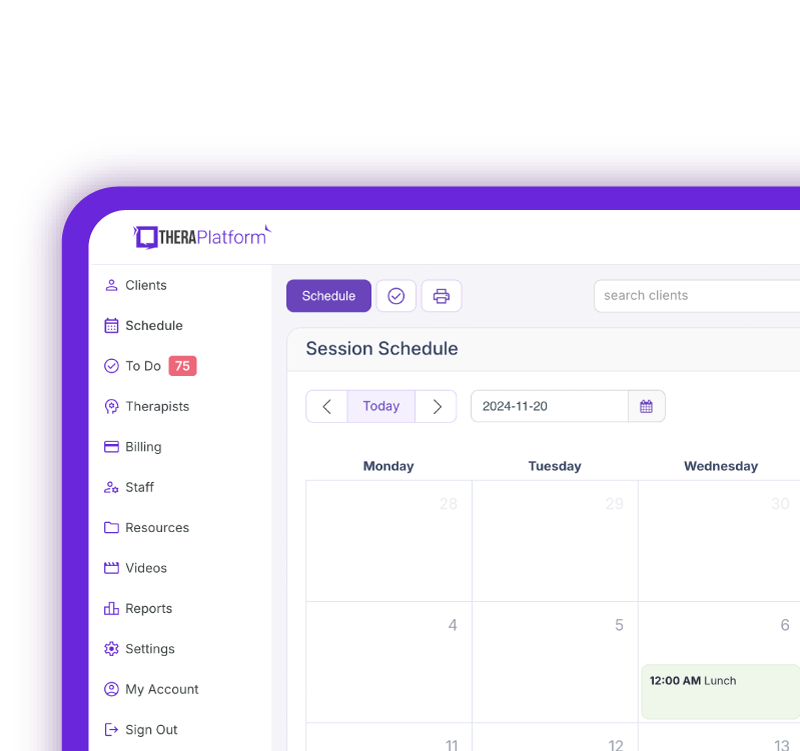
TheraPlatform is an all-in-one EHR, practice management, and teletherapy software with AI-powered notes built for therapists to help them save time on admin tasks. It offers a 30-day risk-free trial with no credit card required and supports different industries and sizes of practices, including physical therapists in group and solo practices.
More resources
- Therapy resources and worksheets
- Therapy private practice courses
- Ultimate teletherapy ebook
- The Ultimate Insurance Billing Guide for Therapists
- The Ultimate Guide to Starting a Private Therapy Practice
- Insurance billing 101
- Practice management tools
Free video classes
- Free on-demand insurance billing for therapist course
- Free mini video lessons to enhance your private practice
- 9 Admin tasks to automate in your private practice
FAQs about physical therapy billing metrics
What physical therapy billing metrics should every clinic track?
Key metrics include clean claim rate, denial rate, days in A/R, net collection rate, CPT and modifier accuracy, payer-specific denial trends, and average reimbursement per visit.
How do billing metrics help reduce claim denials?
By tracking denial reasons and patterns, clinics can pinpoint workflow breakdowns—such as documentation gaps or authorization errors—and implement targeted fixes.
What tools are best for tracking PT billing metrics?
An EHR with an integrated billing dashboard, clearinghouse, and AI-assisted coding analysis offers the most efficient way to monitor performance, prevent errors, and improve reimbursement outcomes.