Claims submission for therapy group practices

Claims processing for group practices can determine a therapy practice’s financial performance if claims are not processed accurately or efficiently.
Summary
- Efficient claims processing is essential for group practices, as errors or delays in documentation, coding, and submissions can significantly impact revenue and financial health.
- Leveraging EHR and billing software with automation, batching, and claim validation features streamlines workflows, reduces errors, and frees staff to focus on client care.
- Clear policies, staff training, and proactive denial management help ensure accountability, compliance with insurance regulations, and higher claim approval rates.
- Regular audits, monitoring KPIs, and continuous process improvements allow therapy practices to optimize reimbursement, maintain compliance, and improve long-term profitability.
→ Click here to enroll in our free on-demand Insurance Billing for Therapists video course [Enroll Now]
Managing claims processing can be overwhelming, though. Unique challenges such as having multiple therapists, navigating complex client histories, and varied billing codes may cause difficulties within processes.
In this comprehensive guide, we’ll provide actionable strategies to enhance claims processing efficiency for group practices. This can allow therapy group practices to improve revenue by optimizing their operations.
Streamline your insurance billing with One EHR
- Claim batching
- Auto claims
- Automated EOB & ERA
- Real-time claim validation
- Real-time claim tracking
- Aging and other reports

What is claims processing for group practices?
Accurate documentation of services provided during therapy sessions is the first step in the claims submission process. Documentation and claims must include critical details, including the client’s information, diagnosis codes, and procedure codes, accompanied by therapy notes.
Compliance with insurance regulations and coding standards is essential. Using incorrect codes can lead to claim denials, which results in missed revenue and additional burdens placed on administrative staff. Staying informed on changes in coding practices can help therapy group practices ensure claims are compliant.
Utilizing Electronic Health Records (EHR) and billing software is helpful in streamlining claims processing management. Automating documentation and claims submissions may reduce the likelihood of errors and improve the overall efficiency of the claims process.
Claims processing policies and procedures
Developing transparent policies for claims processing and submission helps staff understand their roles and responsibilities. Policies can clearly outline the steps involved, including initial documentation, coding, and final submission.
Define responsibilities and timeliness for claims processing tasks to ensure team members share accountability. Assigning certain tasks within the claims process to staff encourages members of the therapy practice to adhere to deadlines for submission and follow up as needed.
Denied claims happen, and it’s crucial to proactively develop protocols for handling these in order to improve recovery and approval rates. Consider establishing a systematic approach to review denials that identifies reasons for the rejection and streamlines the process for corrections or appeals.
Maximize documentation accuracy and completeness
Thorough and accurate documentation is critical for successful claims processing. Detailed therapy notes serve as justification for services and claims to insurers.
To ensure completeness and clarity in therapy session notes, therapists can consider using templates. These templates help maintain comprehensiveness of documentation and maintain consistency throughout the practice.
EHR systems can be used to easily streamline documentation and the claims submission process. Systems such as TheraPlatform offer customizable templates and automated coding suggestions. This can significantly reduce time spent on documentation and streamline the process.
Practice Management + EHR + Telehealth
Manage more in less time in your practice with TheraPlatform
Leveraging technology for efficient claims management
Consider exploring features of claims management software that is tailored specifically to meet the needs of therapy practices. You can look for features such as automated billing, real-time tracking of claims, and seamless integration with EHR systems.
Practices can automate claims submission processes to minimize errors and save time. Automating tasks allows staff to focus on client care and other administrative tasks that require a more personalized approach.
Integrating claims management software with EHR systems can facilitate seamless data flow. This helps ensure that all necessary information is readily available and can reduce the likelihood of errors or missing documentation.
Proactive denial management and revenue cycle optimization
Taking a proactive approach to managing denials can help therapy practices easily navigate potential issues in billing. It’s important to identify common reasons for claim denials. Develop strategies for addressing denials by reviewing details provided in denial letters and making changes in documentation or claims submissions accordingly.
Implement proactive measures to minimize claim rejections and delays. Request pre-authorization for certain services and double check for coding accuracy.
Optimize revenue cycle management processes to maximize reimbursement. Practices can monitor key performance indicators (KPIs) related to claims processing. Looking at areas such as denial rates and timing of processing can provide valuable insight.
Monitoring and reviewing claims processes
Establish regular audits of claims submissions and reimbursement processes. This can help identify potential issues.
Analyze trends by identifying patterns in claim denials and payment delays. Pinpointing these patterns serves as a step towards improvements.
Remember to seek feedback from both staff and insurers regularly. Gather information that can help you identify opportunities for improving claims processes.
Maintaining compliance with regulatory standards
Staying updated on changes to insurance regulations and billing codes is critical. Maintaining current knowledge within areas such as coding guidelines and HIPAA regulations ensures your practice maintains compliance with regulatory standards.
Seek guidance from legal or financial professionals in order to ensure the therapy practice maintains compliance. These experts can also address any issues or answer specific questions on compliance and claims processing you may have.
Therapy practices can provide consistent training to staff on compliance requirements to ensure staff stays up to date on the most current requirements and regulations.
Claims Processing Step | Best Practice | Benefit |
Documentation | Maintain complete, accurate therapy notes with the correct diagnosis and procedure codes. | Supports clean claims and reduces documentation-related denials. |
Policies and workflows | Establish clear claims processing procedures, responsibilities, and submission timelines. | Improves accountability and keeps claims moving efficiently. |
Technology | Use EHR and billing software with automation, claim validation, and real-time tracking. | Reduces manual work, minimizes errors, and speeds claim processing. |
Denial management | Review denied claims, identify root causes, and correct or appeal claims promptly. | Improves claim recovery and future approval rates. |
Monitoring and compliance | Conduct regular audits, monitor KPIs, stay current with coding and insurance requirements, and provide ongoing staff training. | Strengthens compliance and supports long-term financial performance. |
Staff training and support
Provide comprehensive training for staff on claims submission procedures, software utilization, and coding guidelines. Ongoing education on coding updates, insurance regulations, and best practices helps staff stay updated on changes.
By encouraging opening communication among staff members who play a role in the claims management process, you can develop a culture of collaboration.
Efficient claims processing is crucial for supporting the financial health of a therapy group practice. Implementing clear policies, leveraging technology, maintaining compliance, and maximizing accuracy of documentation can optimize the claims process.
Managing claims proactively has the potential to maximize reimbursement and enhance the overall profitability of the practice. Therapy practices should continuously evaluate and refine their claims processes in order to ensure ongoing efficiency and compliance.
Practice Management + EHR + Telehealth
Manage more in less time in your practice with TheraPlatform
How EHR and practice management software can save you time with insurance billing for therapists
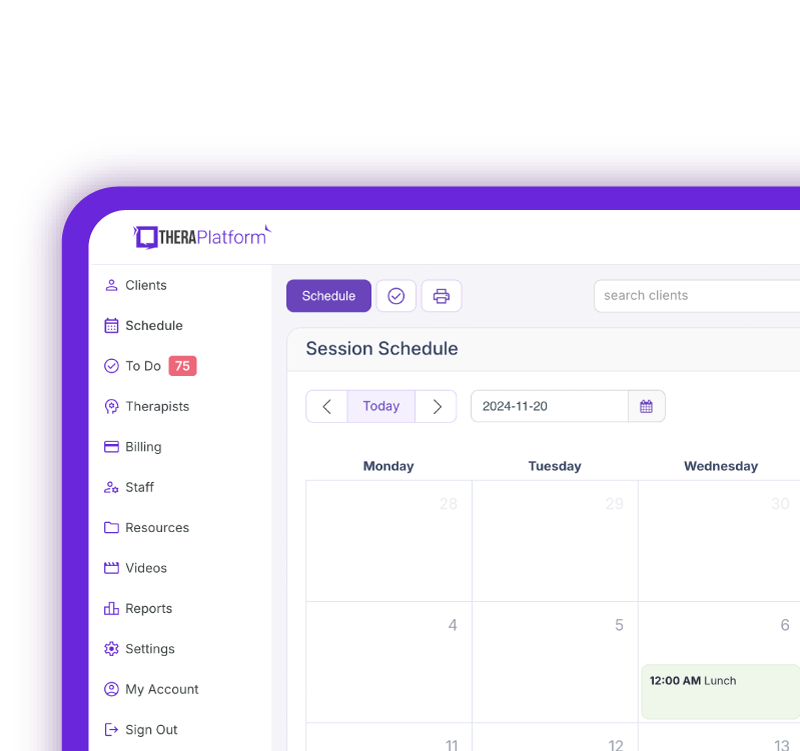
EHRs with integrated billing software and clearing houses, such as TheraPlatform, offer therapists significant advantages in creating an efficient insurance billing process. The key is minimizing the amount of time dedicated to developing, sending, and tracking medical claims through features such as automation and batching.
Watch this video to see how TheraPlatform’s EHR saves time on insurance billing
What are automation and batching?
- Automation refers to setting up software to perform tasks with limited human interaction.
- Batching or performing administrative tasks in blocks of time at once allows you to perform a task from a single entry point with less clicking.
Which billing and medical claim tasks can be automated and batched through billing software?
- Invoices: Create multiple invoices for multiple clients with a click or two of a button or set up auto-invoice creation, and the software will automatically create invoices for you at the preferred time. You can even have the system automatically send invoices to your clients.
- Credit card processing: Charge multiple clients with a click of a button or set up auto credit card billing, and the billing software will automatically charge the card (easier than swiping!)
- Email payment reminders: Never manually send another reminder email for payment again, or skip this altogether by enabling auto credit card charges.
- Automated claim creation and submission: Batch multiple claims with one button click or turn auto claim creation and submission on.
- Live claim validation: The system reviews each claim to catch any human errors before submission, saving you time and reducing rejected claims.
- Automated payment posting: Streamline posting procedures for paid medical claims with ERA. When insurance offers ERA, all their payments will post automatically on TheraPlatform's EHR.
- Tracking: Track payment and profits, including aging invoices, overdue invoices, transactions, billed services, service providers
Utilizing billing software integrated with an EHR and practice management software can make storing and sharing billing and insurance easy and save providers time when it comes to insurance billing for therapists.
Streamline your practice with One EHR
- Scheduling
- Flexible notes
- Template library
- Billing & payments
- Insurance claims
- Client portal
- Telehealth
- E-fax
Resources
TheraPlatform is an all-in-one EHR, practice management, and teletherapy software with AI-powered notes built for therapists to help them save time on admin tasks. It offers a 30-day risk-free trial with no credit card required and supports mental and behavioral health, SLPs, OTs, and PTs in group and solo practices.
More resources
- Therapy resources and worksheets
- Therapy private practice courses
- Ultimate teletherapy ebook
- The Ultimate Insurance Billing Guide for Therapists
- The Ultimate Guide to Starting a Private Therapy Practice
- Insurance billing 101
- Practice management tools
Free video classes
- Free on-demand insurance billing for therapist course
- Free mini video lessons to enhance your private practice
- 9 Admin tasks to automate in your private practice
References
Burks, K., Shields, J., Evans, J., Plumley, J., Gerlach, J., & Flesher, S. (2022). A systematic review of outpatient billing practices. SAGE Open Medicine, 10, 20503121221099021. DOI: https://doi.org/10.1177/20503121221099021 .
Osagie, O. E., Emeka, O. F., & Beatrice, E. (2023). Outsourcing benefits and complications. BW Academic Journal, 9-9. DOI: https://bwjournal.org/index.php/bsjournal/article/view/1363 .
Temel, S., & Durst, S. (2021). Knowledge risk prevention strategies for handling new technological innovations in small businesses. VINE journal of information and knowledge management systems, 51(4), 655-673. DOI: https://www.emerald.com/insight/content/doi/10.1108/VJIKMS-10-2019-0155/full/html
FAQs about claims submission for therapy group practices
How can group practices reduce claim denials?
Improve documentation accuracy, verify coding, establish denial management procedures, and monitor common reasons for claim rejections.
How does EHR and billing software improve claims processing?
EHR and billing software can automate documentation, validate claims, streamline submissions, and reduce administrative errors.
What should group practices monitor to improve claims performance?
Regularly track key performance indicators (KPIs), audit claims, analyze denial trends, and review reimbursement timelines to identify opportunities for improvement.