
Best resources for counselors

Counseling requires deep relational presence, clinical skill, ethical awareness, and ongoing learning. With that, counselors are also navigating new challenges such as telehealth, documentation demands, and the integration of digital tools and artificial intelligence into practice, which is where mental health therapist resources can be priceless.
Summary
- Access to high-quality mental health therapist resources is essential for modern counselors to deliver effective, evidence-based care while adapting to evolving clinical and technological demands.
- Clinical tools like assessments, treatment planners, and worksheets help structure therapy, guide decision-making, and improve client outcomes. Download our free mental health worksheets.
- Practice management resources (EHRs, billing tools, documentation templates) streamline administrative work, support compliance, and reduce burnout.
- Telehealth and integrated digital platforms enhance access to care and improve efficiency by combining scheduling, documentation, communication, and billing into one system.
Streamline your practice with One EHR
- Scheduling
- Flexible notes
- Template library
- Billing & payments
- Insurance claims
- Client portal
- Telehealth
- E-fax

Having access to reliable, evidence-based resources is no longer optional, it is essential. The right tools can improve clinical outcomes, streamline administrative work, support ethical practice, and reduce burnout.
From assessment tools and treatment planners to practice management systems and continuing education, clinicians rely on a wide range of mental health therapist resources to stay effective and sustainable in their work.
Why mental health therapist resources matter
Counselors operate in a field that requires ongoing adaptation. New research, evolving diagnostic frameworks, cultural considerations, and technological advances all shape how therapy is practiced. Access to high-quality mental health therapist resources helps clinicians stay current and grounded in evidence-based care.
Professional organizations like the American Counseling Association emphasize that counselors benefit from access to continuing education, ethical guidance, and clinical tools that support both client care and professional development.
- American Counseling Association
- American Psychological Association
- Substance Abuse and Mental Health Services Administration
Mental health therapist resources serve several key functions in counseling practice. They provide structure for assessment and treatment, offer psychoeducational materials for clients, and support clinical decision-making. They also help counselors maintain ethical and legal standards, which is critical in a profession where client safety and confidentiality are central.
Practice Management + EHR + Telehealth
Manage more in less time in your practice with TheraPlatform
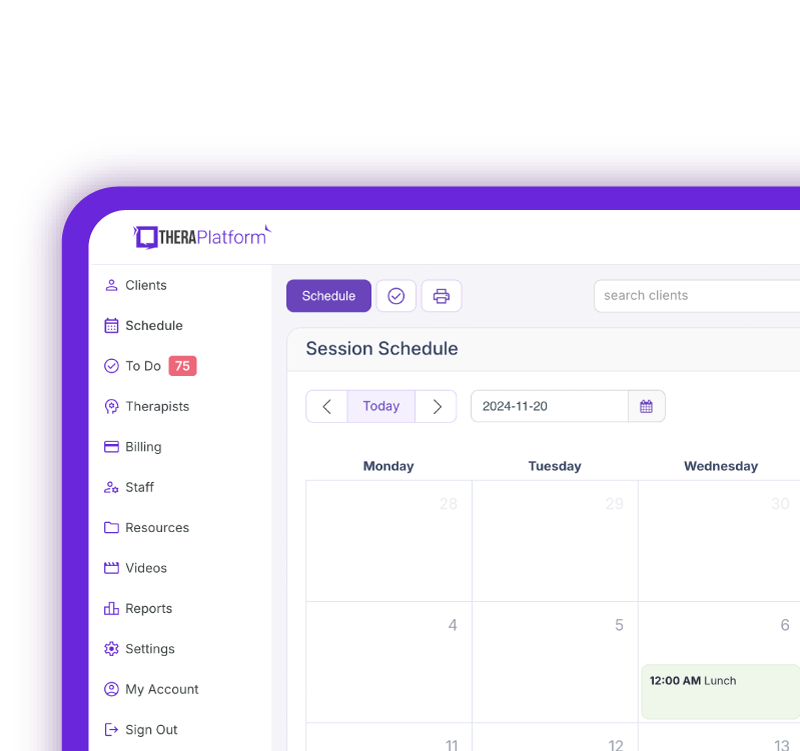
Beyond clinical work, mental health resources also support the business side of counseling. Practice management systems, billing tools, and telehealth platforms help clinicians run efficient and compliant practices. Without these tools, administrative demands can quickly become overwhelming.
In many ways, mental health therapist resources act as a bridge between knowledge and application. They allow counselors to translate theory into practice while maintaining consistency, organization, and quality of care.
Clinical mental health therapist resources
Clinical resources are the foundation of effective counseling practice. These tools support assessment, treatment planning, and intervention, helping therapists provide structured and evidence-based care.
Assessment tools
Assessment is often the starting point of the therapeutic process. Standardized assessment tools help clinicians gather information about symptoms, functioning, and diagnostic considerations. These tools provide a more objective understanding of client needs and can guide treatment planning.
Resources such as the American Psychological Association offer access to validated psychological assessments and research-based tools that support clinical decision-making.
APA resources include structured measures for depression, anxiety, trauma, and other mental health concerns, helping clinicians ensure their assessments are grounded in scientific evidence .
In practice, assessment tools are often used alongside clinical interviews to create a comprehensive picture of the client.
They can also be used to track progress over time, providing measurable outcomes that inform treatment adjustments.
- American Psychological Association
- National Institute of Mental Health
- Patient-Reported Outcomes Measurement Information System
Free Resources for Therapists
Click below and help yourself to peer-created resources:

Treatment planners
Treatment planners are another essential resource for counselors. These tools provide structured frameworks for developing individualized treatment goals and interventions.
Many clinicians use evidence-based treatment planners to ensure their interventions align with best practices. These planners often include goal suggestions, measurable objectives, and recommended interventions for a range of diagnoses and presenting concerns.
Treatment planners are especially helpful for maintaining consistency in documentation and ensuring that treatment remains focused and goal-oriented.
They also support insurance documentation requirements by clearly linking interventions to treatment goals.
- National Institute for Health and Care Excellence
- American Psychological Association
- Wiley Treatment Planner
Worksheets and psychoeducational materials
Worksheets and psychoeducational materials are widely used in therapy to reinforce concepts, build skills, and encourage client engagement between sessions.
Platforms like Therapist Aid provide a large library of worksheets, handouts, and exercises covering topics such as cognitive behavioral therapy, emotional regulation, and communication skills. These tools can help translate abstract therapeutic concepts into practical, actionable steps for clients.
Psychoeducation is a key component of many therapeutic approaches.
Providing clients with clear, accessible materials can improve understanding, increase motivation, and support long-term change.
- Therapist Aid: CBT, DBT, and psychoeducation worksheets
- Psychology Tools: Evidence-based therapy resources and handouts
- TheraPlatform: Extensive library of blogs, worksheets and on-demand video courses on topics like billing and telehealth
Practice management resources
Running a counseling practice involves much more than clinical work. Administrative responsibilities such as scheduling, billing, documentation, and compliance can take up a significant amount of time.
Practice management resources help streamline these tasks, allowing counselors to focus more on client care.
EHR systems
Electronic Health Record (EHR) systems are central to modern counseling practices. These platforms provide secure, HIPAA-compliant systems for storing client information, writing notes, and managing clinical documentation.
EHR systems often include features such as:
- Progress note templates
- Treatment planning tools
- Secure client portals
- Appointment scheduling
- Document storage
Using an EHR system helps ensure that client records are organized, secure, and accessible when needed. It also supports compliance with legal and ethical standards related to confidentiality and record-keeping.
For more information about requirements and compliance:
Billing tools
Billing can be one of the more complex aspects of running a private practice. Counselors who accept insurance must navigate claims submission, reimbursement, and coding requirements.
Billing tools and integrated EHR systems can simplify this process by automating claims submission, tracking payments, and reducing errors.
These tools can save time and reduce financial stress, particularly for clinicians who are new to private practice.
Documentation templates
Documentation is a critical part of ethical and legal practice. Progress notes, treatment plans, and intake assessments must be accurate, thorough, and compliant with professional standards.
Documentation templates provide structure and consistency, helping clinicians complete notes efficiently while ensuring that all required elements are included. This is especially important for insurance audits and legal protection.
Organizations like the American Counseling Association and American Psychological Association provide guidance on documentation practices, emphasizing the importance of accuracy, confidentiality, and compliance with ethical standards.
Professional development resources
Counseling is a lifelong learning profession. Continuing education, professional organizations, and access to research are essential for maintaining competence and staying current in the field.
Continuing education (CEUs)
Most counseling licenses require ongoing continuing education for renewal. CEU courses allow clinicians to expand their knowledge, learn new therapeutic approaches, and stay informed about emerging trends.
Professional organizations such as the American Counseling Association and the American Psychological Association offer webinars, workshops, and training programs that support ongoing learning.
- American Counseling Association
- American Psychological Association
- National Association of Social Workers
CEUs are not just a requirement, they are an opportunity for growth. Many clinicians use continuing education to develop specialties, such as trauma therapy, addiction counseling, or couples work.
Professional associations
Joining a professional association provides access to a wide range of resources, including networking opportunities, advocacy efforts, and educational materials.
Key organizations include:
- American Counseling Association
- American Psychological Association
- National Association of Social Workers
These organizations play an important role in setting ethical standards, advancing research, and supporting the counseling profession as a whole. They also provide access to journals, conferences, and professional communities.
Research databases
Access to research is critical for evidence-based practice. Databases such as PubMed and Google Scholar allow counselors to explore current studies, review treatment approaches, and stay informed about developments in mental health care.
The American Psychological Association also provides databases such as PsycINFO, which offer extensive collections of psychological research and literature.
Using research databases helps clinicians integrate evidence-based practices into their work, improving outcomes and maintaining professional credibility.
Telehealth and digital tools
Technology has transformed the way counseling services are delivered. Telehealth, in particular, has expanded access to care and created new opportunities for both clients and clinicians.
Telehealth platforms allow therapists to provide secure video sessions, share documents, and communicate with clients remotely. These tools have become an essential part of many practices, especially for reaching clients in rural or underserved areas.
Digital tools also include:
- Secure messaging systems
- Online scheduling platforms
- Digital intake forms
- Client portals
When selecting telehealth tools, it is important to prioritize HIPAA compliance, ease of use, and integration with other practice systems. Security and confidentiality must remain central considerations.
Research and professional guidance emphasize the importance of using secure, compliant platforms to protect client information and maintain ethical standards in digital practice.
How EHRs can help with documentation
Modern EHR/practice management platforms (such as TheraPlatform) assist greatly with documentation by providing HIPAA‑compliant, integrated systems for note entry, storage, scheduling, and billing.
They allow therapists to:
- Use and customize templates (e.g., SOAP, DAP, and others) or build their own to streamline note writing and ensure consistency.
- Link notes to treatment plans, goals, and session history so client progress is easily tracked over time.
- Utilize e-fax and secure document sharing via client portal to safely exchange information with clients or other providers while maintaining confidentiality.
- Leverage dictation and telehealth transcription, which can automatically convert sessions into therapy or assessment notes, saving time and reducing manual entry.
- Take advantage of AI features that streamline documentation by automatically populating intake form data into assessment templates and generating complete therapy and assessment notes from the information you provide, all with a single click.
Watch this video to learn how to save time on therapy notes
Meanwhile, AI‑assisted note tools are emerging which can further help clinicians by:
- Automatically transcribing session audio (if permitted) and highlighting key moments (e.g. emotional shifts, major themes).
- Suggesting draft notes or filling in objective or assessment sections based on observed data, freeing up clinicians’ time.
- Supporting consistency and reducing missing components in notes, which helps from both clinical, legal, and insurance perspectives.
Together, structured SOAP‑type notes, good EHR platforms, and smart AI tools support better therapeutic outcomes, more efficient workflows, and stronger accountability.
The field of counseling is complex, demanding, and deeply meaningful. To provide effective care, counselors must balance clinical expertise with ethical responsibility, ongoing learning, and practical business management.
Access to high-quality mental health therapist resources plays a critical role in this process. Clinical tools support assessment and intervention, practice management systems streamline operations, and professional development resources ensure continued growth.
As the profession continues to evolve, counselors who invest in reliable, evidence-based resources are better equipped to adapt, maintain quality care, and sustain their practices over time.
Whether you are a new clinician or an experienced therapist, building a strong toolkit of resources can enhance both your effectiveness and your confidence in the work you do.
Streamline your practice with One EHR
- Scheduling
- Flexible notes
- Template library
- Billing & payments
- Insurance claims
- Client portal
- Telehealth
- E-fax
Resources for mental health therapists
Theraplatform is an all-in-one EHR, practice management and teletherapy solution with AI-powered notes and Wiley Treatment Planners that allow you to focus more on patient care. With a 30-day free trial, you have the opportunity to experience Theraplatform for yourself with no credit card required. Cancel anytime. They also support different industries including mental and behavioral health therapists in group practices and solo practices.
More resources
- Therapy resources and worksheets
- Therapy private practice courses
- Ultimate teletherapy ebook
- The Ultimate Insurance Billing Guide for Therapists
- The Ultimate Guide to Starting a Private Therapy Practice
- Insurance billing 101
- Practice management tools
Free video classes
- Free on-demand insurance billing for therapist course
- Free mini video lessons to enhance your private practice
- 9 Admin tasks to automate in your private practice
References
American Counseling Association. (n.d.). Counseling topics and professional resources. https://www.counseling.org/resources/topics
American Counseling Association. (n.d.). Professional counseling resources. https://www.counseling.org/resources/topics/professional-counseling
APA Practice Directorate. (2024). APA Practice Directorate. https://Www.apa.org. https://www.apa.org/practice
TheraPlatform. (n.d.). Best resources for counselors. https://www.theraplatform.com/blog/985/best-resources-for-counselors
University of Florida Counselor Education Program. (2025). Essential resources for counselors. https://education.ufl.edu/counselor-education/2025/04/23/essential-resources-for-counselors/
Cairn University. (n.d.). Professional counseling practice resources.https://cairn.edu/counseling/resources/
The Clinical Documentation Sourcebook. (n.d.). Retrieved April 2026, from https://catalogimages.wiley.com/images/db/pdf/0471326925.pdf
FAQs about mental health therapist resources
Why are online resources important for counselors?
They help clinicians stay current with research, improve treatment planning, streamline administrative tasks, and maintain ethical and legal standards.
What types of resources do therapists use most often?
Common resources include assessment tools, treatment planners, worksheets, EHR systems, billing tools, and continuing education platforms.
How do EHRs and digital tools support counseling practice?
EHRs and integrated platforms centralize documentation, scheduling, billing, and telehealth, reducing administrative burden and allowing therapists to focus more on client care.