
Speech therapy authorization tracking: How an EHR helps SLPs

Insurance authorizations determine whether certain speech therapy services are approved for coverage under a client's health plan. For SLPs providing recurring treatment, tracking authorized visits, expiration dates, and reauthorization requirements is essential.
Missing an expiration date or exceeding approved limits can contribute to denied claims, delayed reimbursement, and disruptions in care.
This article explores common insurance authorization challenges in speech therapy, the EHR features that help practices manage authorizations, and what to look for when choosing software to support these workflows.
Key takeaways
- Authorization tracking is essential for ongoing speech therapy. Monitoring approved visits, units, and expiration dates helps SLPs avoid coverage gaps and potential claim denials.
- An integrated EHR can simplify authorization management. Centralized records, automated alerts, and remaining-visit tracking reduce the need for separate spreadsheets and manual follow-up.
- Connecting authorizations with scheduling and billing helps prevent errors. Staff can check approved services and visit limits before scheduling appointments or submitting claims.
- Reporting tools support growing practices. Dashboards showing expiring authorizations, remaining visits, and pending approvals help clinicians and administrative staff prioritize follow-up tasks.
→ Download My Free EHR (+practice management software) Buyer’s Guide for Therapists
How can SLPs track speech therapy insurance authorizations?
SLPs can track insurance authorizations by recording approval numbers, authorized visits or units, effective dates, and expiration dates for each client. An EHR with authorization tracking can centralize this information, display remaining visits, send expiration reminders, and connect authorization records with scheduling and billing workflows.
Why insurance authorization management matters for SLP practices
Speech therapy often involves recurring treatment over several weeks or months, making authorization tracking particularly important for maintaining continuity of care.
The American Speech-Language-Hearing Association (ASHA) has highlighted the administrative burden associated with prior authorization requirements, including documentation requests, payer communications, and delays or denials.
For SLP practices, monitoring authorization limits and renewal deadlines can help reduce administrative complications and potential interruptions in treatment.
Streamline your practice with One EHR
- Scheduling
- Flexible notes
- Template library
- Billing & payments
- Insurance claims
- Client portal
- Telehealth
- E-fax

How prior authorizations work in speech therapy
Prior authorization is a payer's approval requirement for certain services before they are provided.
- Initial authorizations: Requirements vary by payer and insurance plan. Some plans require approval before an initial speech therapy evaluation, while others require authorization only before ongoing treatment. Payers may request evaluation results, treatment plans, and documentation supporting medical necessity.
- Visit or unit limits: Depending on the specific insurance plan, authorizations may be provided for a specific maximum number of therapy visits or billing units. To avoid exceeding the approved limits, practices need to track utilization.
- Authorization periods: Authorizations are typically bound by strict effective dates indicating when services may be provided.
- Reauthorization: When an authorization approaches its expiration date or approved visit limit, practices may need to request additional approval for continued therapy. Depending on payer requirements, SLPs may need to submit updated progress notes, treatment plans, assessment findings, or other documentation supporting continued medical necessity.
What documentation may SLPs need for reauthorization?
When requesting additional speech therapy visits, insurers may require updated clinical documentation showing why continued treatment is medically necessary.
Depending on the payer and the client's needs, supporting documentation may include:
- Current treatment goals and progress toward those goals
- Measurable changes in speech, language, communication, or swallowing abilities
- Functional limitations that continue to affect everyday activities
- Skilled interventions provided and the client's response to treatment
- An updated treatment plan with recommended frequency and duration of services
For example, an SLP requesting additional visits for a child with a speech sound disorder may need to document improvements in sound production, remaining communication difficulties, cueing requirements, and treatment goals that have not yet been achieved.
An EHR that keeps treatment goals, progress notes, and assessment results organized can make it easier to locate relevant information when preparing a reauthorization request.
Practice Management + EHR + Telehealth
Manage more in less time in your practice with TheraPlatform
What EHR features help SLPs manage insurance authorizations?
Managing insurance authorizations can involve tracking approved visits, monitoring expiration dates, and coordinating follow-up with insurance payers. For speech therapy practices providing ongoing treatment, an EHR with integrated authorization management can help reduce manual tracking and keep important information accessible.
Look for features that help SLPs and administrative staff monitor authorization status, identify upcoming renewals, and connect authorization information with scheduling and billing.
Essential insurance authorization management features in TheraPlatform
TheraPlatform feature | What it does | Why it matters for SLP practices |
|---|---|---|
Centralized authorization records | Stores insurance authorization information, including expiration dates | Keeps authorization details organized and accessible to clinicians and staff |
Authorized session tracking | Tracks sessions used and the number of authorized sessions remaining | Helps SLPs monitor visit limits during ongoing therapy |
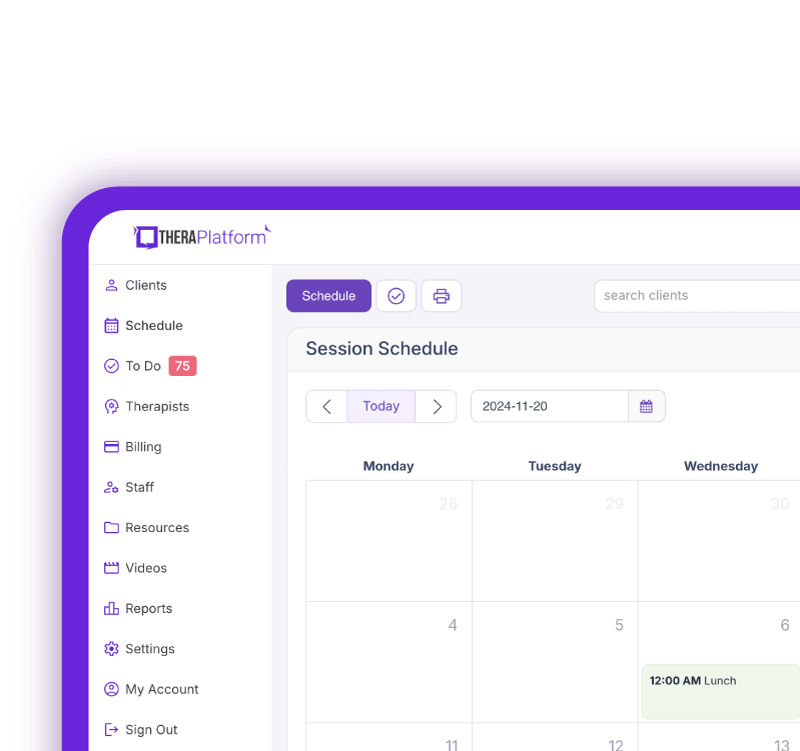
Calendar integration | Displays remaining authorized sessions directly on the calendar | Helps staff plan appointments with authorization limits in mind |
Expiration notifications | Alerts users when authorizations are approaching expiration | Gives practices time to follow up or request reauthorization |
Authorization reporting | Provides reports to monitor authorization activity | Helps practices manage authorizations across multiple clients and clinicians |
Insurance eligibility verification | Supports manual and automated insurance coverage checks | Helps staff verify coverage information before appointments; separate authorization checks may still be required. |
Integrated insurance billing | Connects electronic claim submission, claim tracking, and ERA processing with practice management workflows | Reduces the need to manage billing tasks in separate systems |
These features can be especially useful for SLPs managing recurring therapy appointments or working with multiple insurance plans. For example, a speech therapist providing weekly articulation therapy can check the number of authorized visits remaining before scheduling additional sessions.
How authorization tracking connects with scheduling and billing
Insurance authorizations affect more than reimbursement. They can also influence when appointments are scheduled, whether additional visits require approval, and how claims are prepared.
An EHR that connects authorization information with scheduling and billing can help practices manage these workflows more efficiently.
Scheduling speech therapy appointments
Before scheduling additional sessions, clinicians and administrative staff may need to confirm:
- Remaining authorized visits: Whether the client has enough approved sessions for upcoming appointments.
- Authorization expiration dates: Whether planned sessions fall within the approved authorization period.
- Approved services: Whether the planned speech therapy services align with the authorization.
- Reauthorization needs: Whether updated documentation or payer approval is needed before continuing treatment.
For example, an SLP providing twice-weekly language therapy may discover that only three authorized visits remain. Having that information available during scheduling can help the practice prepare a reauthorization request before the approved visits are exhausted.
Preparing insurance claims
Authorization information is also important when preparing and submitting speech therapy claims.
Depending on payer requirements, billing staff may need to verify:
- Authorization numbers and effective dates
- Approved services and applicable procedure codes
- Remaining authorized visits or units
- Whether the services provided fall within the approved authorization period
Keeping authorization details accessible alongside billing records can reduce the need to search through separate systems and help staff identify potential reimbursement issues before submitting claims.
Because authorization requirements vary by payer and plan, practices should verify coverage and billing requirements rather than assuming an approved authorization guarantees payment.
Free Resources for Therapists
Click below and help yourself to peer-created resources:

Managing speech therapy authorizations across multiple clients and payers
Speech therapy group practices often manage clients with different insurance plans, authorization periods, and approved visit limits. As caseloads grow, keeping these details organized across multiple SLPs can become challenging.
EHR authorization reporting can help staff monitor:
- Upcoming authorization expirations
- Remaining authorized visits
- Clients who may need reauthorization
- Pending authorization requests
For example, a group practice with several SLPs providing pediatric speech and language therapy can use centralized authorization records to identify which clients are approaching their approved visit limits.
This visibility helps administrative staff prioritize follow-up, coordinate with clinicians, and reduce the risk of missed renewal deadlines.
Questions to ask vendors about authorization management
When evaluating EHR software, look past generic features and ask vendors targeted questions about their authorization workflow:
- Does the system track authorization dates, visits, and units?
- Can it automatically update remaining visits after appointments?
- Can the system trigger automated alerts for upcoming expiration dates or low visit counts?
- How does the platform manage multiple authorizations for the same client if they overlap or renew sequentially?
- Is authorization information integrated with scheduling and billing?
- Is it possible for authorization documents to be stored securely?
- What do reporting dashboards look like for tracking pending and active authorizations across a group practice?
How TheraPlatform helps SLPs manage insurance authorizations
TheraPlatform helps speech therapy practices organize insurance authorizations alongside scheduling and billing. Clinicians and staff can monitor approved sessions, view remaining authorized visits directly from the calendar, and receive notifications about upcoming expiration dates.
Authorization reporting can also help group practices monitor upcoming renewals across multiple clients and clinicians.
By keeping these workflows connected, TheraPlatform can help reduce manual tracking and make authorization information easier to access throughout the treatment process.
Start your free trial to explore TheraPlatform's authorization tracking and practice management features.
Streamline your practice with One EHR
- Scheduling
- Flexible notes
- Template library
- Billing & payments
- Insurance claims
- Client portal
- Telehealth
- E-fax
Resources for speech therapists
TheraPlatform is an all-in-one EHR, practice management, and teletherapy software with AI-powered notes built for therapists to help them save time on admin tasks. It offers a 30-day risk-free trial with no credit card required and supports different industries and sizes of practices, including speech-language pathologists in group and solo practices.
More resources
- Therapy resources and worksheets
- Therapy private practice courses
- Ultimate teletherapy ebook
- The Ultimate Insurance Billing Guide for Therapists
- The Ultimate Guide to Starting a Private Therapy Practice
- Insurance billing 101
- Practice management tools
Free video classes
- Free on-demand insurance billing for therapist course
- Free mini video lessons to enhance your private practice
- 9 Admin tasks to automate in your private practice
References
Ayer, M. (2023). Relieving administrative burden on clinical staff with streamlined workflows and speech-recognition software. British Journal of Nursing, 32(Sup16b), S1-S9. DOI: https://www.magonlinelibrary.com/doi/abs/10.12968/bjon.2023.32.Sup16b.S4?journalCode=bjon
Crooks, A. (2022). What Do Insurers Look for in Your Claims? A claims and clinical reviewer offers insights for accurate and timely reimbursement of speech-language services. ASHA Leader. https://leader.pubs.asha.org/do/10.1044/leader.OTP1.27032022.30/full/
Murphy, J., Beauchamp, N., Sun, K. J., Lau, B. D., Wilson, R. F., Lobner, K., ... & Johnson, P. T. (2025). Adverse effects of health plan prior authorization on clinical effectiveness and patient outcomes: A systematic review. The American journal of medicine. DOI: https://doi.org/10.1016/j.amjmed.2025.08.018.
FAQs about speech therapy insurance authorization tracking in EHRs
How can an EHR help SLPs track insurance authorizations?
An EHR can centralize authorization numbers, approved services, effective dates, and remaining visits or units. Some systems also provide alerts for upcoming expirations and authorization limits.
Can an EHR help prevent speech therapy visits from exceeding authorized limits?
Yes. EHRs with authorization tracking and scheduling integration can help staff monitor remaining visits and identify potential coverage issues before appointments occur.
What should SLPs look for in EHR authorization management software?
Look for centralized authorization records, visit and unit tracking, expiration alerts, scheduling and billing integration, secure document storage, and reporting tools that identify pending or expiring authorizations.