
Online marketing strategies for your teletherapy services

Marketing for therapists is a relatively new concept in the world of therapy, where the growth of telehealth has transformed how mental health services are delivered. Clients can now access therapy from home, work, college campuses, and rural communities where local mental health resources may be limited.
While this expanded accessibility creates significant opportunities for clinicians, it also means that potential clients have more choices than ever before when searching for a therapist online.
Summary
- Telehealth marketing helps clients find and access teletherapy services. A strong digital presence increases visibility, builds trust, and connects potential clients with appropriate care. Download my free telehealth marketing checklist.
- An optimized website is the foundation of teletherapy marketing. Dedicated service pages, SEO best practices, accessibility features, and mobile-friendly design can improve user experience and search rankings.
- Educational content supports both SEO and client engagement. Blogs, FAQs, guides, and downloadable resources can demonstrate expertise while helping prospective clients understand mental health concerns and treatment options.
- Technology can enhance the client experience. Integrated telehealth platforms with scheduling, documentation, secure messaging, and client portals can streamline operations and support practice growth.
→ Click Here to Enroll in My Free On-Demand Top to Bottom Teletherapy Video Course [Enroll Now]
Simply offering teletherapy services is no longer enough to ensure that prospective clients can find your practice. Intentional telehealth marketing for therapists helps increase visibility, establish credibility, and connect your services with individuals who need support.
For many clinicians, telehealth marketing can feel uncomfortable or overwhelming. Clinical training often focuses on assessment, diagnosis, treatment planning, and therapeutic interventions rather than website development or search engine optimization.
Fortunately, effective marketing does not require aggressive sales tactics. Instead, it involves making it easier for potential clients to find accurate information about your services and determine whether your practice is a good fit for their needs.
Streamline your practice with One EHR
- Scheduling
- Flexible notes
- Template library
- Billing & payments
- Insurance claims
- Client portal
- Telehealth
- E-fax

Why telehealth marketing for therapists matters
Marketing serves a different purpose in healthcare than it does in many other industries. Ethical marketing is not about persuading people to seek unnecessary services. Instead, it helps individuals access accurate information so they can make informed decisions about their care.
For teletherapy providers, marketing is particularly important because clients cannot easily discover services through physical office locations, signage, or local referrals alone. Most prospective clients begin their search online.
Many adults now use the internet to find information, including healthcare-related resources. As consumers increasingly research providers online, a strong digital presence becomes essential for mental health practices.
Effective telehealth marketing for therapists helps:
- Increase visibility in online searches
- Educate potential clients about available services
- Build trust and credibility
- Differentiate their practice from competitors
- Expand access to underserved populations
- Support practice sustainability and growth
Telehealth marketing can also strengthen referral relationships with healthcare providers, schools, community agencies, and other professionals who may recommend your services.
As a side note, but an important one, all marketing efforts should align with ethical standards established by professional organizations such as the American Counseling Association (ACA), American Psychological Association (APA), and National Association of Social Workers (NASW).
Website optimization for therapists
Your website is often the first impression prospective clients have of your practice. A well-designed website can help visitors quickly understand who you serve, what services you offer, and how to schedule an appointment.
Therapist’s websites should prioritize accessibility, usability, and clear communication to support informed decision-making.
SEO basics
Search Engine Optimization (SEO) refers to practices that help search engines understand and rank website content.
Good SEO does not require complex technical expertise. Many effective strategies involve creating helpful, relevant content that addresses client questions.
Basic SEO Strategies for Therapists
Identify relevant keywords
Consider terms potential clients may search for, such as:
- Teletherapy for anxiety
- Online counseling for depression
- Virtual trauma therapy
- Child therapist in Oregon
- Couples counseling online
Keywords should be incorporated naturally into website content rather than repeated excessively.
Create clear age Titles
Each page should have a descriptive title that reflects its content.
Examples include:
- Online anxiety counseling
- Teletherapy for teens
- Trauma therapy services
Write helpful meta descriptions
Meta descriptions provide short summaries that may appear in search engine results.
A good meta description:
- Clearly describes services
- Includes relevant keywords
- Encourages users to learn more
Optimize mobile experience
According to Google and numerous healthcare usability studies, mobile-friendly websites are increasingly important because many users search for services on smartphones.
Ensure that:
- Pages load quickly
- Text is easy to read
- Buttons are accessible
- Scheduling forms function properly
Improve accessibility
Accessibility benefits all users and may support compliance with disability accommodations.
The U.S. Department of Health and Human Services recommends:
- Alt text for images
- Readable fonts
- Sufficient color contrast
- Keyboard navigation options
- Clear page structure
Service pages
One of the most common website mistakes therapists make is placing all services on a single page. Dedicated service pages help both clients and search engines understand your areas of expertise.
Examples might include:
- Anxiety therapy
- Depression counseling
- ADHD coaching
- Trauma therapy
- Couples counseling
- Teletherapy services
Each service page should clearly explain:
- Who the service is for: Describe common concerns and symptoms.
- What clients can expect: Explain your therapeutic approach and treatment process.
- Benefits of treatment: Discuss potential outcomes without making guarantees.
- How to get started: include a clear call to action such as:
- Schedule a consultation
- Contact the practice
- Request an appointment
Service pages also provide opportunities to incorporate relevant keywords naturally.
Practice Management + EHR + Telehealth
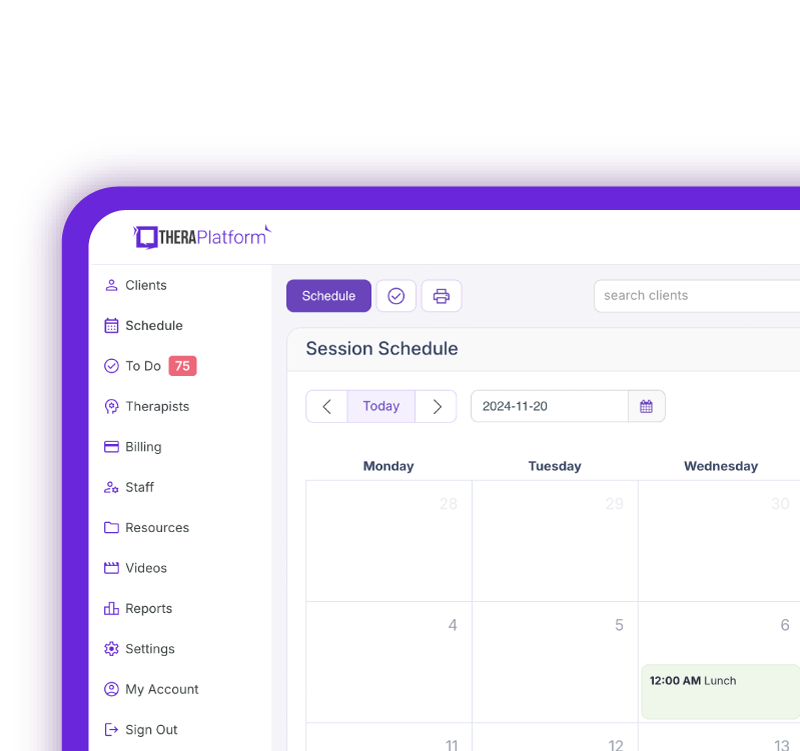
Manage more in less time in your practice with TheraPlatform
Content marketing
Content marketing involves creating educational materials that help potential clients understand mental health concerns and available treatment options.
For therapists, content marketing can demonstrate expertise while providing value to readers.
Unlike advertising, content marketing focuses on education rather than promotion.
Blogs
Blogging remains one of the most effective ways to increase website visibility and support SEO.
A well-maintained blog can:
- Improve search engine rankings
- Address common client questions
- Build credibility
- Encourage website engagement
- Support referral relationships
Examples of blog topics include:
- Signs of anxiety in children
- What to expect in teletherapy
- Coping strategies for stress
- Understanding trauma responses
- Benefits of couples counseling
When writing blogs:
- Focus on client needs: Address questions prospective clients are likely asking.
- Use evidence-based information: Support claims with reputable sources such as:
- SAMHSA
- NIH
- CDC
- APA
- University research centers
- Write clearly: Avoid excessive clinical jargon.
- Update content periodically: Mental health information and best practices evolve over time. Regular updates help maintain accuracy and relevance.
Educational resources
In addition to blogs, therapists can create educational resources that provide ongoing value to clients and referral partners.
Downloadable guides
Checklists
- Signs of burnout
- Depression symptom trackers
- Self-care assessments
Frequently Asked Questions
Answering common questions can improve user experience while reducing barriers to treatment.
Examples include:
- Is teletherapy effective?
- How do online sessions work?
- What technology do I need?
- Does insurance cover teletherapy?
Research consistently shows that psychoeducation can improve engagement and treatment outcomes by helping individuals better understand their concerns and available interventions.
Free Resources for Therapists
Click below and help yourself to peer-created resources:

Social media strategies
Social media can help therapists connect with broader audiences and share educational content.
However, social media marketing should be approached thoughtfully and ethically.
The APA and ACA recommend maintaining professional boundaries and protecting client confidentiality when using social platforms. Keep your personal social media separate from your professional social media.
Select appropriate platforms
Not every platform is necessary.
Common options include:
Useful for:
- Professional networking
- Referral relationships
- Sharing educational content
Useful for:
- Community engagement
- Practice updates
- Educational resources
Useful for:
- Mental health tips
- Infographics
- Short educational content
YouTube
Useful for:
- Educational videos
- Frequently asked questions
- Mental health education
Share educational content
The most effective mental health social media content often focuses on education.
Examples include:
- Coping skills
- Stress management tips
- Therapy myths
- Mental health awareness topics
- Teletherapy preparation guidance
Avoid providing individualized clinical advice through social media. Instead, use content to educate and direct individuals toward appropriate professional support.
Maintain professional boundaries
Professional organizations recommend:
- Separate personal and professional accounts
- Avoid interacting with clients in ways that compromise confidentiality
- Use informed consent discussions to address social media policies
- Follow applicable state licensing regulations
A written social media policy can help clarify expectations and maintain important boundaries and ethics.
Telehealth platform integration
Technology plays a significant role in the client experience. A telehealth platform should support both clinical care and business operations.
According to the Office of the National Coordinator for Health Information Technology, integrated digital systems can improve efficiency, communication, and care coordination.
When evaluating telehealth platforms, consider whether they include:
- Online scheduling: Online appointment booking may reduce administrative burden and increase convenience for clients.
- Secure messaging: Secure communication helps protect privacy while improving responsiveness.
- Electronic documentation: Integrated documentation systems can streamline workflow and reduce administrative tasks.
- Telehealth video sessions: Reliable video functionality supports a positive client experience.
- Client portals: Portals allow clients to access forms, appointments, and resources in one location.
A seamless client experience can positively influence retention and referrals.
Telehealth marketing does not have to feel overwhelming or sales-focused. At its core, effective marketing is about helping potential clients find accurate information and access appropriate care.
A strong teletherapy marketing for therapists strategy often includes:
- An optimized website
- Dedicated service pages
- Educational blog content
- Helpful client resources
- Ethical social media engagement
- Efficient telehealth technology
These elements work together to improve visibility, build trust, and support long-term practice sustainability.
As telehealth continues to expand access to mental health services, clinicians who invest in thoughtful digital marketing strategies will be better positioned to connect with clients and meet growing community needs.
Choosing the best HIPAA-compliant teletherapy platform
Telehealth use has skyrocketed since the pandemic, with teletherapy emerging as a trusted, convenient, and secure alternative to in-person care for both children and adults. Therapists and clients report high satisfaction, and teletherapy now accounts for 13–17% of U.S. healthcare visits.
To protect privacy, providers must use HIPAA-compliant video platforms. The top platforms not only secure sessions with encryption but also support scheduling, billing, documentation, and client portals to streamline practice management.
The best teletherapy platforms go beyond video conferencing. By combining compliance, reliability, stable video, resources, games and practice management tools, they help therapists deliver care that’s safe, effective, and adaptable to modern client needs.
Marketing is also another aspect of owning a practice that can be conducted through a secure HIPAA-compliant platform as you can communicate with existing clients via chat, email and more.
Why therapists choose TheraPlatform as their teletherapy platform
Whether for solo practice or larger clinics, therapists choose TheraPlatform for its blend of usability, flexibility, and robust telehealth tools.
Watch this video to discover how TheraPlatform elevates Telehealth sessions
Here are top reasons why therapists choose TheraPlatform for teletherapy:
- Efficiency and convenience: Everything down to payments, scheduling, documentation, and insurance claims is managed in one integrated platform, saving time and reducing friction.
- Security and compliance: TheraPlatform is fully HIPAA and PIPEDA compliant, with encrypted video sessions, secure data storage, and 24/7 monitoring for peace of mind.
- Engagement tools: Built-in interactive features like whiteboards, games, media sharing, screen annotation, and therapy-specific “apps” enhance client engagement especially useful in pediatric and speech therapy.
- Client-centered functionality: The secure client portal empowers clients to book sessions, complete forms, submit documents, and make payments, reducing admin work for the therapist.
- Customization and flexibility: Therapists can create and customize templates for notes, treatment plans, and intake forms allowing them to tailor workflows to their practice style.
- All-in-one practice management: Combines telehealth, EHR, billing, insurance, scheduling, and documentation, eliminating the need for multiple tools or software.
- Therapy-specific design: Unlike generic telehealth platforms, TheraPlatform is purpose-built for mental health, speech therapy, OT, PT, and more with features tailored to each specialty.
- Professional credibility: Recording features, branded portals, and compliance tools help therapists present a more professional, trustworthy experience to clients.
- Positive user experience: Therapists appreciate having everything in one place and often report a smoother workflow, fewer tech issues, and faster onboarding.
What therapists are saying about TheraPlatform telehealth
Therapists praise TheraPlatform for its ease of use, seamless scheduling, and built-in billing tools like superbills. They value the platform’s features including intuitive charting, customizable notes, and interactive telehealth tools as well as the responsive support team, which listens to feedback and implements updates.
Many highlight that the platform offers the best of all worlds, combining excellent video conferencing with resource sharing and an engaging, client-centered teletherapy experience.
"There's seriously no better platform out there! Easy to use … syncs to your personal schedule, provides superbills …"- Coastlinespeechtherapy (Source)
“It is not just the platform, it is the team behind TheraPlatform, always willing to help and receptive to feedback to bring updates requests to live,” Orly, Smarty Therapy PC (Source)
"The video conferencing is excellent and the ability to share resources and the interactive screen make Telehealth a rich experience."- Kathy J. (Source)
"TheraPlatform has been the best of all worlds! … intuitive charting, in-system billing, customizable notes …"-Kendrah B. (Source)
Streamline your practice with One EHR
- Scheduling
- Flexible notes
- Template library
- Billing & payments
- Insurance claims
- Client portal
- Telehealth
- E-fax
Resources for mental health therapists
Theraplatform is an all-in-one EHR, practice management and teletherapy solution with AI-powered notes and Wiley Treatment Planners that allow you to focus more on patient care. With a 30-day free trial, you have the opportunity to experience Theraplatform for yourself with no credit card required. Cancel anytime. They also support different industries including mental and behavioral health therapists in group practices and solo practices.
More resources
- Therapy resources and worksheets
- Therapy private practice courses
- Ultimate teletherapy ebook
- The Ultimate Insurance Billing Guide for Therapists
- The Ultimate Guide to Starting a Private Therapy Practice
- Insurance billing 101
- Practice management tools
Free video classes
- Free on-demand insurance billing for therapist course
- Free mini video lessons to enhance your private practice
- 9 Admin tasks to automate in your private practice
References
American Counseling Association. (2014). ACA code of ethics. https://www.counseling.org/docs/default-source/default-document-library/ethics/2014-aca-code-of-ethics.pdf?sfvrsn=55ab73d01
American Psychological Association. (2017). Ethical principles of psychologists and code of conduct. https://www.apa.org/ethics/code
Centers for Disease Control and Prevention. (2024). Mental health resources and information. https://www.cdc.gov/mental-health/?CDC_AAref_Val=https://www.cdc.gov/mentalhealth/
Office of the National Coordinator for Health Information Technology. (n.d.). Benefits of health information technology. https://healthit.gov/health-it-basics/benefits-health-it/
Pew Research Center. (2024). Internet, broadband, and mobile facts. https://www.pewresearch.org/internet/fact-sheet/internet-broadband
Substance Abuse and Mental Health Services Administration. (2023). Digital Therapeutics for Management and Treatment of Behavioral Health. https://archive.org/details/dig-ther-adv/page/n5/mode/2up
U.S. Department of Health and Human Services. (2024). Health literacy online: A guide for simplifying the user experience. https://health.gov/healthliteracyonline
U.S. Small Business Administration. (2024). Marketing and sales guidance for small businesses. https://www.sba.gov/business-guide/manage-your-business/marketing-sales
TheraPlatform. (n.d.). Teletherapy software and practice management platform.https://www.theraplatform.com
Google Search Central. (2024). SEO Starter Guide. https://developers.google.com/search/docs/fundamentals/seo-starter-guide
National Institute of Mental Health. (2024). Technology and the future of mental health treatment. https://www.nimh.nih.gov/health/topics/technology-and-the-future-of-mental-health-treatment
FAQs about teletherapy marketing for therapists
Why is marketing important for teletherapy practices?
Marketing helps potential clients discover your services online, understand what you offer, and determine whether your practice is a good fit for their needs.
What are the most effective teletherapy marketing strategies?
Effective strategies include website optimization, SEO, educational content creation, social media engagement, and providing helpful client resources.
How can therapists market their services ethically?
Therapists should focus on education, accurate information, professional boundaries, and compliance with ethical guidelines established by organizations such as the ACA, APA, and NASW.